
Loading...

E14: Adrienn Major

Ditching Retainers: How POD LDN Redefines Post-Production

Listen on Spotify

Podcast Overview

Retainers? Contracts? Slow approvals? Forget it.


Adrienn Major is breaking every rule of the traditional agency model with POD LDN — a global post-production powerhouse built on flexibility, speed, and trust.
No retainers. No big contracts. Just on-demand creative firepower that scales up or down instantly.
From managing 80 in-house artists and 1,500 freelancers, to building AI tools and automation into her workflows, Adrienn shows what it really takes to stay lean, reactive, and cashflow smart in a chaotic industry.

This episode is a masterclass in running a modern creative business — from scaling teams globally to rethinking pricing models, leadership, diversity, and the role of AI in post-production.

Founder of POD LDN, Adrienn shares her journey from growing up in Hungary to building one of the most agile post-production companies in the world. She explains how ditching retainers and complex pricing in favor of flat day rates created speed and trust with clients, and how a massive freelance pool gives POD the flexibility to handle anything from VFX to CGI on demand.

She also opens up about leadership in a male-dominated industry, why agencies need to embrace automation and AI (including creating an AI version of herself), and the surprising lessons she’s taken from The Wolf of Wall Street.

Whether you’re scaling an agency, exploring automation, or looking for inspiration on building flexible business models, this episode is packed with insights you won’t want to miss.

Listen to the full episode now and learn how to scale without burning cash or slowing down.

Topics Covered

00:08 — Introduction: Meet Adrienn Major and POD LDN
01:32 — Adrienn’s journey from Hungary to launching her own company
05:29 — Scaling POD: 80 in-house artists + 1,500 freelancers worldwide
08:31 — Why traditional agencies struggle with reactivity (and how POD solved it)
09:55 — Building a business without retainers or long contracts
12:09 — Flat-rate pricing: £290 per artist per day, £40/hour for smaller tasks
15:16 — How POD helps agencies, in-house teams, and post houses scale flexibly
18:45 — The advantage of tapping into global talent pools
21:41 — Managing a decentralized, international team day-to-day
24:34 — Reinventing workflows: morning check-ins, gamification, and agile leadership
25:25 — How AI and automation power POD’s operations (from onboarding to project setup)
28:52 — Creating an AI version of Adrienn for onboarding and training
32:31 — The future of AI in creative work: threats, opportunities, and collaboration
36:41 — Keeping pace with fast-moving AI tools and platforms
37:11 — Diversity in agencies: challenges and the need for male allies
40:19 — Scaling lessons: staying flexible, keeping overheads low, and cashflow smart
43:16 — Book recommendation: The Way of the Wolf by Jordan Belfort
44:57 — How to connect with Adrienn and learn more about POD LDN
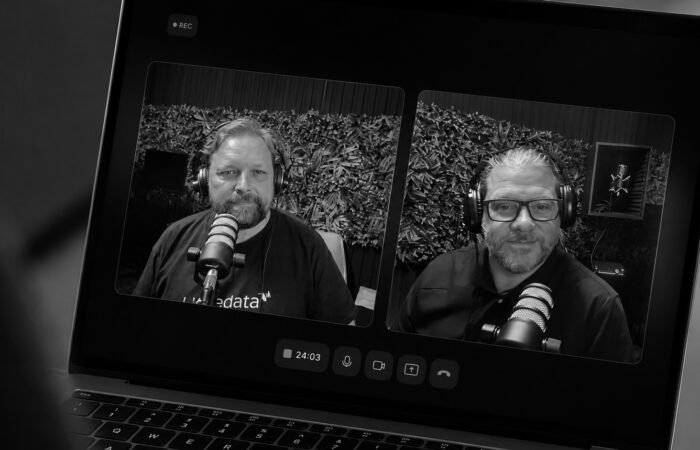
Richard Hill (00:08.033)

Welcome to episode 14 of Agency Intensive. I'm Richard Hill, your host. In this episode, I'm joined by Adrienn Major, founder of POD LDN a flexible post-production company that's challenging the traditional agency model. Crazy model. Adrienn shares a journey from growing up in Hungary to building a global post-production powerhouse.

without retainers, without big contracts and without sacrificing speed or quality. Cracking episode. We dive into the behind the scenes magic of managing 80 in-house artists and 1500 freelancers around the world, scaling an agency while staying lean, reactive and cash flow smart, building operational infrastructure to support creative chaos and how AI and automation are changing the post-production game. Plus a surprising reason why she created an AI

version of ourselves. I think you've all got to have an AI version after listening to this episode. We also talk leadership, diversity in the agency world and the unexpected business lessons from the Wolf of Wall Street. Who knew, Now do me one favour, hit the subscribe or follow button. Whatever you're listening to this episode so you're always the first to know when a new episode drops. Let's get into it.

Richard Hill (01:22.316)

Welcome to Agency Intensive. Great to have you on. I think before we get into the nitty gritty of agency life, it'd be great for you to introduce yourself and how you got into the world of agency.

Thank you. Thanks for having me.

Adrienne Major (01:32.814)

Okay, good question to start with. So I moved to the UK in 2007. I came here to study from Hungary. I always wanted to study film and production and the creative world. Even as a child, to be honest with you, that's all I ever wanted to do. I did like a film course when I was 10, from the age of 10 probably.

And I did a lot of short films. so I was very clear. I was very, very clear from early age about what I wanted. I think I'm one of those lucky ones that from, from very early age. my, my vision was very clear. And then, yeah, I moved here in 2007, went to uni. I worked part time whilst I was studying. And then, yeah, after uni, I was like, whoop, I'm ready.

ready to break into the world, only to realize it's not easy. yeah, I tried various things. I did a production assistant role that was pretty much unpaid, but it was good for the experience. Then I did like live shows, a lot of YouTube stuff, so music videos, pretty much, you know, any kind of experience I could get my hands on.

and then, yeah, I did that for a couple of years and then I did manage to get a proper, proper job. I worked in publishing first for future publishing. Yeah. Yeah. And that was very exciting. it was the age of YouTube. the publisher started to produce content. so a lot of online things started to come up. and I worked in the in-house studio, so was very lucky I could work one day on.

I don't know, a guitar magazine and then the next day on PlayStation. So it was really, really fun to be honest with you. And that helped me build a bit of production experience, build a bit of, you know, different creative experiences. And then I moved on to production side, actually, worked in a production company.

Adrienne Major (03:56.404)

I did a lot of live streaming. So I was there when Google came out with Hangouts. And that was again, super fun. So I was again, really lucky to be there when a piece of technology was involving and coming online and new media formats were there. So then I really got into that. And then that slowly died off and I moved over to agency side. And that's when really...

yes.

Adrienne Major (04:25.314)

The magic happened. Cause our agency said, yeah, I was like, wow, this is where you actually see from beginning to the end, how things, you know, come along and how they happen. And yeah, it was basically love at first sight. Yeah. And, and yeah, that's where I spent most of my career until 2020 when I started my own company, pod, which is actually a post-production company.

But we do work very much like an agency. So that's where we are today.

So you went to see came from Hungary, not knowing many people, any people. No. Went to uni. Yeah. Got a job at Future. Yeah. Which I think most people will know. Obviously a lot of print magazines back in the day. You know, I remember having many subscriptions to Future. My back statement said Future, Future back in the day. And then went on to work for an agency and then set up your own agency only sort of circa five years ago then.

Exactly.

Adrienne Major (05:29.966)

Exactly, exactly.

Yeah, so what sort of size is the business now to give our listeners a feel?

So the business, the way I explain our size breaks into three sections. So we have our UK based team, which is very small. And then we have our studio in Budapest. Half our staff is client facing. And then we have our project team. Then we have our artist team. So our client service is about five people at the moment. Our project team is about 20.

to 25, our in-house artists are about 80. 80. 80. And then we have our pool, is what I'm the most excited about, which is about 1500 regular freelancers. So it's a little bit like, you know, tier one, tier two, tier three, tier four. And that's where I think.

As

Adrienne Major (06:31.69)

Our sort of magic is that we have this huge, huge pool and access to many, different artists around the world.

So we've got to get into that, think, is how to build it. So going from you, you you've, right, I'm to do this agency thing. And then obviously you just explain there, you know, you've got five client facing team members, then you've got 20 project managers, then you've got access to XMAAB in-house and then external freelancers to manage, to build that and scale that, you know, what sort of challenges have you had to go through to do that?

So the ideas really came from my agency experiences. So over the years I freelanced in many places and that I, at that time I didn't know, but that was a really, really good experience to see how every agency works. And I got like insights to like, you know, in this agency, they have an in-house team and they do it this way. That agency works with partners, that agency works with, I don't know, another agency.

So I got an insight to all of that. And what I have seen is that very often agencies have very similar problems, which means they're not very good at being reactive. So, you know, when they're working on planned client things, that's their strength. So if they have multiple planned campaigns in the year, that's what they're really good at. But the change in the content we

we consume changed drastically. And suddenly there's this huge need of really, really quick content that are, you know, the clients are asking the agencies to do. And what seems to happen, especially back then in agencies, is that these requests come in, they go through, you know, where it's client teams and they hit production. And then the producers will have to option. Maybe they have some in-house team.

Adrienne Major (08:31.022)

which will be like limited skillset. Maybe they have, you know, designers, motion designers, whatever. And then they also will have their production partners that they used to working. And what happens when a job comes in, if it doesn't fit those two methods, it creates a problem. Either they have to go through resourcing and what it means like in an agency that multiple people needs to approve to get a freelancer in.

It goes to finance or whoever manages the takes three weeks. It takes three weeks. By the time you get a freelancer in the brief changed. I always noticed this in most of the agencies and I was like, Oh God, I wish I could do this better. There must be a better way. And then yeah, in 2020, the light switch moment came and I was like, Oh, why don't we start doing a...

post production company that's on demand and simple and always available.

So companies that then work with you, they can dip in and out then of, right, we've got nothing on at the moment, but we need a couple of days. And I know you charge like a flat day rate. And then the day of subscription with you, or is it just basically they go, no, we need this, we need this. So it's quite, how can I put it? It can be erratic maybe. Yeah. Predictable a little bit.

Yeah,

Adrienne Major (09:55.618)

And to most people, is probably insane. Yeah, to be honest with you. I mean, it's pretty crazy to be in an agency-ish world without retainers and without big contracts and being on demand. Purely trusting that clients will like enough to come back. But basically that's what's happening. So we have...

a variety of clients. When I started Pod, it was mainly agency clients, because that's where my network was from. And I knew what producers needed. And we basically work and still worked and still work as kind of like an extension of their in-house team. So, you know, just some people that you know, you can go to when you need something. turns out that it was quite a lot. So when we started, actually it was COVID.

Yeah, great time to start a business. But what happened is actually it was a perfect storm. Absolutely perfect storm because a lot of agencies let their freelancers go. So they didn't really have the capacity. Shoots weren't happening. So they still needed to produce content. So the need for post-production was much higher. They didn't have the artists. And then they had all those stuff that needed

Perfect timing, wasn't it? yeah.

Exactly. Woohoo for COVID. But yeah, no, they needed repurposing, changing the messaging, changing the layout. So huge ton of content. And we found somehow the perfect little gap in the market at that time.

Richard Hill (11:41.272)

So now we've got obviously agencies, also what sort of in-house companies of a certain size that have maybe a gap or they're on the Maybe they don't need somebody full time and they need somebody to do one, two, three, four, 10 days a month. Something, some months, some not, not the other months. So, but no retainers. So we've got a flat couple of different options on the day rates. Yeah. Maybe talk to us about that. Cause I think, you know, it's good to talk commercials to Well, what you're happy to share.

Exactly that.

Richard Hill (12:09.858)

You know, think obviously a lot of listeners, running agencies will be cold sweat. No retainers, not waking up to any direct debits hitting the account in the morning. No retainer contracts. Obviously flat daily rates.

about that. Yeah, yeah. So with the idea of, you know, moving at speed, we needed to create something that allows us to be quick. And from my previous experience, I knew that pricing negotiations is where time just disappears. having a flat day rate upfront, Manda, our clients knew upfront our day rate, which is at the moment £290 per artist per day, or £400 on the weekend.

Or for anything small, we charge an hourly rate, which is £40 an hour. It's very simple. And also what it means is our clients that don't really understand complex post-production tasks, don't feel uncomfortable because what they see is, okay, needs VFX artists for three days.

They understand what three days is. might not really understand what the difference is between a VFX artist or an editor. But because it's the same rate, doesn't really...

To them it's a £300 job, person, process.

Adrienne Major (13:24.878)

Exactly. Exactly. And cost controllers love it as well. So they know our price is upfront. We quote based on the time it requires. And because of that, we can move really quickly. So most things, you know, coming in the morning or in the afternoon, within an hour, we have a scope within two hours, quote approved by, you know, four hour plus it's in work.

And things move that quick, whether it's small or big, sometimes even quicker, to be honest with you. And that allows us to be very, not just flexible, but reactive to client changes and needs because they always change. So, you know, it's no point to be worried about changes. They always happen and things always move and get pushed back and...

brief changed and timeline changed. So we just reacting to those things.

So if that client's agreed to do a day and that day then turns into maybe two days because they're changing things. They know how much it's going to cost. It's a very unique proposition, isn't it? I can see the draw of why people would want that. I think there's probably a lot of agencies that don't have or don't want that full-time person in the business, but they need a bit of access or some access to that skill set, which is very unique, very specialist.

And then the in-house team that maybe don't want to hire an agency on a retainer, which is, some companies that's not the right answer. They can commit to two days a month, 600 pound, think the 295 was it as a start point. Obviously there's options there. It's a very, very unique, but very interesting, a very successful business.

Adrienne Major (15:16.672)

Yeah, and we see the need for it more and more. Like I mentioned at the beginning, we started with agencies who would have, let's say, changing clients, know, scopes are changing on the end client side. And especially during COVID, they wouldn't want to invest in, you know, overhead. They don't want to hire. It's a lot of money commitment. Maybe they're just doing project based. So we were there really to help.

those agencies scale. really maybe they are hiring and maybe they just don't have the people, but they need a way to execute it. And freelance is an option and freelancers are great. The only thing is with freelancers when jobs change, scope change, it's really hard and it's quite unfair on the freelancers if the agency books them, then they cancel them.

And I think with your type of work, I think there can be not a very clear understanding of, let's say you hire somebody to do a video. You go, can you just do some animation with that? That's not the same. That's a different role. So, know, I've tried it. It's a very different role, there? course, to the somebody that's not that experienced in post-production, maybe won't know.

Yeah, exactly then.

Richard Hill (16:31.022)

You know, there's six or seven different roles there that you have access to, you've got in-house, you've got access to externals that can pick up all those elements and deliver an end product that's maybe taking three or four subservices and building and building that out. So in terms of winning new business then, we like to touch on this.

Exactly.

Richard Hill (16:53.88)

Obviously you've got that niche of agencies. think somebody threw a stat at us last week of 30,000 agencies in the UK, straight freelance, you know, people that do client work or an agency, which is ridiculous. obviously that's a big pool of potential. What's been good for you to win your business and attract new business?

Yeah, mean, the landscape did change a little bit for us in the past few years and that's the trend that we see with some brands having in-house studios and doing things internally. So for us, kind of doesn't matter because we can support any in-house teams. It doesn't matter if it's on brand side or agency side. So we just slot in to the existing facility or the existing infrastructure.

But we definitely see that more brands have some kind of in-house capacity and they very much look forward to other companies like us supporting that because they will be able to hire, let's say, a graphic designer, a creative, maybe a video editor. But when it comes to VFX, CGI, that's way, way above there.

think our video producer is getting a cold sweat now. So yeah, we'll do some CGI, we'll do some animation, we'll do a film and event, we'll do 14 podcasts, print a movie.

It's exactly that. you know, sometimes it's just a skillset or a task they come to us. They might have, and actually we love it. They might have really good editors that know the brand inside and out and they do the edit and they come to us and say, Hey guys, we actually noticed that there were some logos in the shots. Can you just help us clean up the logos? And we'll just help clean up the logos. So it's a really nice collaborative.

Adrienne Major (18:45.198)

way of working, to be honest with you. We also work with other post houses, which is again quite an interesting thing because some people might look at us as a competition. But with post houses as well, you just can't hire all the talent in the world. So, you know, if you're running a business, especially agencies and production companies and post houses, they always try and find the skillset that matches their work.

And then they try and sell the type of work that.

project to this when really the client probably needs this and this but we don't have that.

Yeah, exactly. Exactly. So what we do is the opposite. We get the people in based on whatever the client wants. That's why we really need that strong freelance pool. Don't try and force it into our in-house artist and magically match the skillset to that. If they can't do it, it's fine.

So I guess that advantage of having that global talent, obviously you've come from Hungary. You've got, obviously native Hungarian, I assume. Obviously got access to talent all over the world. What sort of trends are you seeing with that and how beneficial has that been to you?

Adrienne Major (20:02.208)

Yeah. So what we are seeing is that production teams are getting very much decentralized and global. if you look at some trends from film industry to bigger agencies, you can see that they were probably the very early adapters of tapping into global, global talent. mean, the film industry started quite a few years ago with like setting up studios in India or, know, VFX farms and whatever. Cause it's not really a new concept.

And then we have seen now bigger agency networks as well. I think Publises, for example, is one that is very heavily investing in the, in the lower of the side of Europe. And that that's where we are as well. Yeah, we are in Hungary. We have a studio in Hungary, mainly because my business partner had already had a company there. Obviously I'm from there.

You're going back there a bit where the studio

Yeah, quite regularly. It's always nice. actually... excuse for a trip. Exactly, exactly. But actually our pool in-house, our staff is extremely international. I think we have like 15, 17 nationalities and different languages in-house.

So how do you manage, what are some of the ways you manage that global team in terms of day-to-day structure, meetings, do you have on all hands every week or? I'm intrigued personally, you we have a similar structure but not as vast as yours. You know, we've got international team scattered around the world and we do it a certain way, but the majority of our team are here.

Richard Hill (21:41.88)

We're probably flip. are, we're now really focused on building our international and our sort of worldwide team. It's a big focus of mine. but, our core team is here, you know, here, right here in the, in Lincoln in the UK, but you're the other way around, I think. so yeah, I'll be intrigued to find out some more around the sort of operational, how you manage the, the sheer scale and the day to day and the weeks. Sure.

Yeah.

Adrienne Major (22:06.542)

So we did go through a few iterations of pod. So when we started, it was literally borrowing some people from my business partners, other company, just like getting the work done. And then, know, we, as we grow, we had our own teams. In the beginning, I did try to manage that team, which was incredibly difficult trying to remotely manage people. So very quickly, think year two, we hired that team.

differently. we hired senior leaders. created a better infrastructure around them. So I didn't have to be so hands on. And that really helped. And basically on a day to day basis, this day, how it works is we have a morning status where everyone is every morning from all over the world.

That's sorry, that's just our project team and client service, not including the 1500 artists too. Exactly. That would be a nightmare.

So that's a sort of 25-ish.

physical on a call or that's a check it

Adrienne Major (23:19.03)

Yeah, we get on a call. It's pretty fun. We try and gamify it. We go through status. We spin the wheel who's presenting the next day, the status. We play games like at the moment we're doing Word of the Day. So whoever is doing the presentation in their language or whatever language they want to bring a Word of the Day. Yeah, or they can just like, yeah, or they just teach us a word. So we try and gamify it.

and they have to say it in their presentation.

Richard Hill (23:48.661)

Yeah, that is really

Yeah, yeah, try and like bring everyone in and every day someone else does the status so everyone is involved. And yeah, it's just really having those people to manage the individual teams so that I don't have to like try

Managers, at least senior leaders. So if you've like, excuse the pun, but have you got pods in the pod there? So it's like a group of six with a leader, group of six with a leader.

Yeah, pretty much.

Exactly. Client service team lead, project team lead.

Richard Hill (24:20.832)

One client service team lead might have four or five project managers.

Yeah, exactly that. And then we work closer with the more senior.

Adrienne Major (24:34.638)

Exactly that. And you know, it's working for now. Will it work in the future? I don't know. It's definitely one of our core strengths that when we see that something doesn't work or we have a better idea, we just go ahead and do it. And we do that a lot. know, we reinventing ourselves, doing things differently. It's very common.

I love it. So we can't really do a podcast without using the word AI. It's sort of ingrained. Love that. It's ingrained in every other sentence that's spoken in the agencies. So, you know, I'm really intrigued to hear what sort of things you're doing, you know, for maybe the client side, operational, what sort of things you've tried, what things you're having success with in terms of trying, implementing.

Yes.

Richard Hill (25:25.646)

Smart tools, think you refer to, AI within the agency.

Yeah, I mean, it's funny you mentioned smart tools because a lot of the times the tools are not actually AI that people think of it as AI, it's actually automation. but I love both. through my experience and previous jobs, I always been quite close to innovations and technical changes. So I see AI as one of those. Obviously it's...

That's so true.

Adrienne Major (25:58.966)

way bigger and, you know, pretty much affecting everyone in the world. So for me personally, this area is quite exciting. I do worry a little bit on a global scale for, you know, lot of people losing their job. It's a very serious concern. But just like directly of what we do, I am quite excited about it. So we actually started to invest.

in AI and our AI team sort of end of last year, mid last year. And we separated the team who's just basically testing things. And we thought that would be like a good way to start educating ourselves because there aren't really experts in the field, I think, at the moment. So we're doing a lot of testing.

What we definitely learned is that our IT team became 10 times valuable since then, because there are so many tools and to really make them useful, you need someone to connect them. the IT team has actually, you know, it's very essential to like write an API that can do connect to this. Exactly. Exactly that. So what we're doing day to day is,

ever to do that.

Adrienne Major (27:20.3)

With our internal project management tools, for example, we use monday.com. We have written a lot of automation, developed our own automations to monday.com to help, I don't know, with the click of a button, we can open a job and it creates all the documentation and the job number and the Slack channel and all those things that you had to do before manually. So that's one good example.

So Rob, you go to Monday, right, create new, great template, put the template in or create, then go and set up a Google Drive with this, that, send a welcome email, so on, set payment, has a payment been made, there's a contract.

Yeah.

Adrienne Major (28:00.32)

Everything's automated. Exactly. And I think that's like a really, really good use of AI and automation. Yeah. Yeah. Onboarding. And I think like all these like functional uses personally are a bit more exciting to me than creating an image, but I also like the, gen AI part of AI. Because obviously what took before, you know,

potential weeks and months, we can really, really quickly do it and there is no limitation to it. So I do like it. We're doing lots of tests. Actually, we made an AI version of me.

Yes, that sounds interesting.

It's not ready for market.

You know, we've done exactly the same. Myself and Dan, who's behind the camera here. Yeah, we'll have to compare our AI clones. Yeah, mine's definitely, mine needs some polish.

Adrienne Major (28:52.362)

Yeah, mine as well. Did you take your voices on your image?

Yes, yeah, the voice, I'm a very posh version of myself, I've found. I'm very animated, my hands are just going crazy. Like somebody's electrocuted me. But it's very, it's actually, I would say very good as a first version. We spent half a day on that film, filmed various versions of videos of me in different locations. We went to my house and shot some video of me in the garden. nice. For like a whole different look. I've been playing with that.

Exactly.

Richard Hill (29:25.998)

And the sort of this part is perfect. It's nearly perfect. You know, the mouth is just, it's ridiculous. I was watching it. Yeah. I was showing somebody yesterday and it was like, this is really good. But then I'm quite animated. It's like, what's going on? Because I do speak with my hands quite a lot. So I need to rerecord my initial video and just sit on my hands a little bit and just the odd hand gesture. So you're, you're, you're going to be using your

right?

Richard Hill (29:52.842)

AI versions of yourself then for what you

would like to. Definitely what I wanted to use it for is when a new person joins and they're doing the onboarding, instead of them reading millions of documents, it would be way more better if they could watch me explain how the company works and...

But rather than sit and record video, you just give it the script. Watch the video, but you haven't got to create it.

Yeah. Yeah. Yeah. And I think like that's like a huge opportunity for, know, companies like all those, sorry, if I call them boring, trainings and internal whatever communications, if you could have AI characters deliver them, it's much more.

I know a whole business that does that as a business. they create, they have a training SaaS, the companies buy their training SaaS. They help you build an AI version of yourself. Wow. their SaaS, that company's subscription gives their workforce access to their training. Yeah. And they've been doing it a long while. They were one of the first, mean, Hey Jen is the, is that the one you're using?

Adrienne Major (30:58.819)

yeah, yeah, We do use Hadron as well.

one of the first people to use that about, I think about three years ago. I might have got a timeline slightly wrong. Yeah, I I only heard about it three weeks ago, I three months ago. So yeah. Wow.

That's crazy.

Adrienne Major (31:14.554)

So yeah, so I think, you know, those uses are really good just to help engagement and people to digest information better. Obviously, learning is a huge area for AI. The other thing was probably worth touching on is, you know, whether is AI going to take our jobs in the creative world? It will some, but when it comes to actually producing and creating content,

Like I just don't see where there is no need for humans. Cause let's say a brand or a company comes to you that they want a video. Like someone still needs to prompt that. There is still a lot of traditional posts that needs to happen on it. Like if you prompt separate scenes, like editing it together. So there is definitely still a lot of needs for traditional posts as well.

I do think certain jobs probably will disappear a little bit. Yeah, they can retrain to be more AI prompt focused. But yeah, a lot of like very manual VFX things. It's probably quite easy to replace.

but it'll change.

Richard Hill (32:31.038)

It's just moving on the video side. saw a presentation about three weeks ago. I was at an event and I mentioned a bit off camera that I went to an event in London and drove to London. I went to a two, three day event and one of the presentations was about AI and the different tools and listed off half a dozen tools for creative. Hey, Jen was one of them. came back and create a copy of myself. but in terms of just the speed at the way that your industry particularly is changing, moving, new things coming out, the quality is just like.

Even like a month ago, I've found now that on my drive to work, I'm listening to a podcast. It's called the daily AI update, think. it's literally every day. Every day I'm like, oh my God, this has changed. This changed. This has You know, I think even just a couple of days ago, we were building things in a tool called NAM. It's like a workflow. So you get to me to build that. We've got.

Yeah.

Richard Hill (33:25.46)

you've got your tech guy, I've got a couple of tech guys that have installed the NANR server and...

See what I mean? Like you do need more tech.

Yeah, absolutely. But literally last week you used to go in and you know, you disconnect to this API and this Dizzy and then the Chachie PT and then the Claude and then the API here and you prompt to do this. Whereas just last week, my understanding, we haven't tested this, but it looks fairly solid. If you can see, if you can write down, like you want this to do this, to do that, to do this, and you take a picture, you literally prompt that within Claude, connect Claude to an AN and it'll build.

the workflow in XYZ code and then it works. So now a lot of people were sharing their NAM workflows online and then saying, for £500 I'll build you. So a lot of people are just taking a photo of the workflow and then the AI is turning that into a workable model. And that's like probably like two weeks ago, you couldn't do that. By the time we go live with this, I'm sure a lot of people will be like, yeah, I've done that now.

That's pretty crazy.

Adrienne Major (34:27.342)

But that's another thing, like because it's changing so quickly, I see that as another need for humans because when our clients ask us, hey guys, can you, I don't know, create this, we have so many tools and they're changing every day. What might have worked yesterday, maybe tomorrow there's a better tool. So you do need to keep up with that. And I just don't think clients will do that themselves.

What I think is on agency owners minds a lot is, you know, how fast they're moving. are thinking, we've only, we've only had paid chat, cheap PT and Claude for three weeks and such and such agencies building these things. And what advice would you give to agencies that maybe thinks they're a little bit, that maybe think they're a little bit slow in reality? They're probably not. Cause I think my thoughts are that a lot of people are talking a lot about this, this and this, but they're maybe not doing quite.

Yeah, I mean, he's just staying. I don't even know if you can stay ahead of the curve. Maybe just stay on the curve.

Just keep putting some time in. Yeah. Every weekly commit to X amount of time.

Yeah, and have someone, if not in-house, but maybe on a retainer that you can tap into that you know are constantly keeping themselves up to date because it is changing so quickly. And if you know, if you have a client request, just know who to speak to that can execute because there is just millions of tools. They're actually not cheap.

Adrienne Major (35:59.32)

So to test which one works best is not a cheap task. These platforms are on ZONE credits. They're probably hundreds of dollars.

think it'd be interesting to get you back on this podcast in like 12 months time. I think your agency is going to be Your AI team and your whole team have moved around a little bit, know, as in different, slightly retrained different roles or just adapting. I think it's very exciting for your industry. It's quite daunting at the same time because there's a lot of change and we can do that. What this does, I didn't know this could do. Oh my gosh, this guy.

AI.

Richard Hill (36:41.184)

Yeah. Been abreast of it, but I think like you say, having somebody that is maybe just out there and reporting or presenting on a weekly basis. Right. These are the half dozen new tools. I've gone through them all. I spent a day going through them all and this can do this or this. that's really impressive. I'm ready yet, but they're doing this and just keeping up is the tinge. Right. Exactly. A complete change of direction for you. Okay. So when I go to agency events, I went to one agency event and there were 60 men.

Coming up.

Richard Hill (37:11.374)

and zero women in the room. I find it very frustrating. We're sort of 50-50 in our business, but I think in terms of agency leadership and agency owners, it's very, very, very dominated. We're going to an event after this, and the challenge of finding ladies that would want to come, or ladies in the agency world, is more more challenging, especially where we are demographically.

have you found being a lady in a very male dominated industry?

It is, it is challenging to be honest with you because certain times, you know, people don't expect you to have an input or don't trust you to deliver certain things or they don't give you that much of you know, credit. So, you know, it's quite a normal thing, unfortunately. I try not think about it though, because I always thought, you know, if you're doing a good job and you're

proving it constantly, people will eventually notice. So I would say if you're lady with similar challenges, try not to it get to you because if you're doing constantly good work, it will be enough, I think. But I actually been to some really good events as well. And one of the things they said there is actually we need men to support women.

So women doing a lot of things alone is not enough. So if any man listening can support women, that's literally the best thing you can do. I personally do it in my business as well. I hire a lot of women and I love it. And also different ages. It's really good to have diversity and different experiences. So on a personal level, if anyone listening, they can do a little, just a little something.

Adrienne Major (39:09.314)

give an opportunity to a female or someone that's coming back from med leave or an older person considering a career change. Highly, highly recommend.

I think it's getting like, when you go to events where there's speakers, think if you went to an event, majority of events, seven or eight years ago, 20 speakers, be like one lady. Whereas now I think it's very much, it's becoming a bit more diverse, yeah.

Yeah, think people are a bit more conscious. Yeah, it's not an easy situation, but I think like you just can't let it get to you, to be honest with you on a personal level.

It's been a pleasure having you on. We've a couple of questions left to go. So I think, you know, one of the core topics is scaling, know, scaling an agency, you know, we hit these plateaus maybe is what we talk about, you whether it's getting to your first X amount of revenue a month or your 20th hire or a million pounds a year or 10 million, you know, we've had people under 50 million a year. We've had people doing half a million a year. What advice would you give?

two agency owners that are looking to sort of scale, move through that next plateau.

Adrienne Major (40:19.95)

So one of the things I learned and I am learning, because I've only been running a business for the past five years. So I'm pretty much still on the learning curve, is to keep your overheads low and try and find flexibility and scalability to flex up and flex down because the conditions change. And that's definitely the biggest learning I learned since COVID. mean, the past five years, it just hasn't been a normal period.

Crazy. Every six months there was something. Exactly. And you have to constantly react to that. You know, before I had a business, I didn't really see that because I worked in a big agency group or wherever and you don't get involved in the...

It's a different world, isn't it, when you're a agency, lots of budget sort of thing, where it's your own money. It's a little bit different.

Yeah, exactly. So if you're starting a business, really think like, what is the bare minimum you need to commit to a build onto that and try and like think about cashflow and you know, how you can maximize your profits and, and keep in the safe zone basically, because what you want to avoid is being on the edge because that's really stressful. Yeah, exactly. Obviously I've done that.

I'll keep you up at night.

Adrienne Major (41:38.328)

from a personal mistake, can say it's not a good place to be. I know, it's part of the learning. I'm sure everyone that's been on this.

Yeah.

Richard Hill (41:49.032)

So spending the time being understanding business, running a business, see that sort of flexibility on costs, whether that's people or you know.

Yeah.

Adrienne Major (41:58.922)

what you're investing in, what you're praying for.

What are you spending money on that maybe you don't need anymore? You know, there's a lot of satirical tools out there. Officers, do you need that office? Cowork. Question, argument, coworking is obviously a great option, isn't it? Exactly. Or an office that's shared. It's maybe only got half a dozen desks, but 12 of you share it rather than a 12 person office. Exactly. Snagging days when people come in, that type of thing.

Do need that office? is.

Adrienne Major (42:21.246)

Yeah, yeah, like I think those are such, you know, critical decisions that really helps you on the longer term. If you try and not spend on things you don't need and focus on business development, spend it on your marketing, spend it on your sales, spend it on everything else that can generate income.

Love it. Well, thank you for coming on the show. It's been a pleasure having you on. I to every episode with a book recommendation. have a book to recommend?

So I am actually reading a book at the moment. It's The Way of the Wolf, Jordan Balfour. And I would recommend it because I think as a business owner, and especially if you're aspiring to be a business owner, what you don't realize is you have to be a salesperson. And this came to me as a shock, to be honest with you. So I come from a production background and I've always been a producer.

okay.

Adrienne Major (43:16.142)

Realizing that now I am a salesperson was not a nice shock because I felt completely out of my depth. know, it's not a comfortable task, but you have to learn how to sell your business and everything in a business is around sales. So it's really good to understand the psychology and the techniques and everything that goes around sales because it's a very transferable skill.

So yeah, learn how to sell.

Yeah, I think that's brilliant advice. Like you say, a of agency owners start off and they're the practitioner, they're production expert, the SEO expert. Ah, we need to keep the lights on. We've got to pay the bills. I need paying, people need paying. Sell stuff. Exactly. We've got a problem. And you chose Jordan Belfort to be your teacher. know.

Exactly.

Adrienne Major (44:05.912)

No, it's like controversial. this book is actually pretty good because he turned a little bit. He's a bit more ethical. Then again, if you want to learn from someone, who are going to learn from?

We've been doing this for five years and I didn't expect to get a Jordan Bell 4 reference in, but...

There we go. we go. mean, learn it so well, you're going to jail. Maybe not. Maybe not, but.

Well Adriana, thank you very very much for coming on the show. Those that want to find out more about you, more about Pard London, what's the best way to do that?

Probably LinkedIn, if you're big on LinkedIn, you can always message me. My full name is Adrienne Major. You can find me on all the usual socials. We have an Instagram. Our website is podlondon.com with LDN. Yeah, that's pretty much it.

Richard Hill (44:57.016)

We'll hook it all up on the show notes and thanks for coming on the show.

Thanks for having me. Thank you.

If you enjoyed this episode, hit the subscribe or follow button wherever you are listening to this podcast. You're always the first to know when a new episode is released. Have a fantastic day and I'll see you on the next one.

Work with Richard Hill Work with Richard Hill