Loading...

E22: Kat Thomas

How to Get Your Brand Found in ChatGPT - The New Rules of PR

Listen on Spotify

Podcast Overview

25 years in PR. Two agencies. One very big decision.

Kat started out in London at Cake. Then she headed to Australia for 12 months. She stayed 13 years.

At 28, she founded One Green Bean in Sydney with backing from independent ad agency Host. It grew fast, winning Google, Nike, Uber and Diageo, plus Australia’s biggest bank, supermarket and car brand.

At around 50 staff, Havas came on board as a shareholder. In 2015 Kat moved back to London to open One Green Bean London inside Havas HQ. Havas later bought the business outright. Kat stayed on for two more years, then in 2025 she handed over the keys.

Today she’s the founder of Knock Three Times, an AI-first creative PR agency backed by Common Interest.

Who’s this episode for?

You’ll get a lot out of this one if you’re being approached about investment or a sale and want to know what life with a network shareholder is really like. It’s also for you if you’re wondering when it’s time to step away from a business you founded, or trying to work out how your clients will show up when their customers ask ChatGPT or Claude for an answer.

The honest bits

Kat doesn’t gloss over the hard parts.

She explains why she brought Havas in. Australia’s market caps out on budgets, and she wanted bigger work on a global stage.

She admits she was the biggest skeptic about moving into a ten-storey network tower. A year in, she toured warehouses in Shoreditch and Dalston to move the team out. Her team asked if she was mad. They loved the office. It was her first real lesson in how much the next generation’s expectations had changed.

When she resigned, she had a six-month notice period. She refused to spend five and a half months pretending nothing was happening, so she told her team and clients within three weeks.

She also admits that, looking back, she probably should have travelled instead of going straight into writing a book.

PR in the age of answers

The second half gets into what Kat calls the holy trinity. Editorial coverage influences AI, and AI influences people.

While the network conversation about AI was all about efficiency and headcount, Kat wanted something different. She wanted to build a comms business with AI baked in from day zero, focused on capability and specialism, not size.

Knock Three Times runs on a private Claude Enterprise setup, plus three tools built in-house. Audit finds the editorial sources LLMs actually draw on for a category. Architect turns that into a media targeting strategy. Readiness scores press releases out of 100 for structure, newsworthiness, data and whether they read as AI-written.

She also shares why a dog walker’s blog in the West Midlands gets cited by LLMs for Butternut Box alongside national titles. She explains why LLMs recommend confidently in FMCG but stay cautious in health and finance. And she shows how a Readiness score dropping from 74 to 40 after client amends gives her an objective way to push back on a watered-down release.

If you’re thinking about your own exit, or how your agency stays relevant now that people ask AI for answers first, this one’s packed with real, candid lessons

Topics Covered:

0:25 – How Kat got into PR and founded One Green Bean in Sydney at 28

2:46 – Rapid growth: winning Google, Nike, Uber and Diageo

6:48 – Taking on Havas as a shareholder at 50 staff and opening One Green Bean London

12:35 – Deciding when to leave the business you founded, and why AI was the trigger

18:07 – Resigning, telling everyone straight away and going straight into writing a book

25:15 – Launching Knock Three Times: capability and specialism over headcount

30:30 – The age of answers and building the agency on Claude Enterprise

33:47 – Audit and Architect: finding the sources LLMs cite, from national titles to a dog walker’s blog

39:37 – Readiness: scoring press releases out of 100 to stop them being watered down

43:29 – The PR tactics that will matter most for eCommerce brands
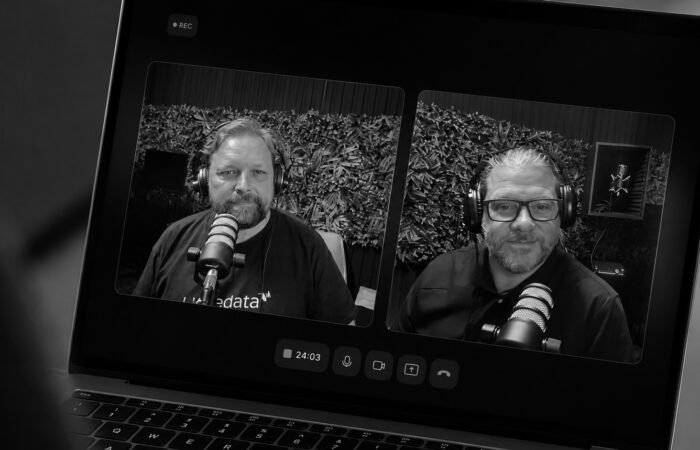
Richard Hill (00:04.357)
Hi Kat, welcome to the Agency Intensive Podcast.

Kat Thomas (00:07.266)
Thank you, lovely to be here.

Richard Hill (00:09.307)
Thank you for agreeing to join us. Now, I think before we get into t all things, agency, SAS, PR, AI maybe, I think it would be great for you to introduce yourself and how you got into the wonderful world of agency and then agencies.

Kat Thomas (00:25.792)
Yes, happy to. It's been a long time, been 25 years. I'm Kat Thomas. I'm the founder of a business called Knock Three Times. We are an AI first, I suppose, creative PR agency that is reasonably new to the landscape, although I'm not having had a couple of agency sort of stories behind me. I guess I'm talking about my third chapter, really, Richard.

Richard Hill (00:52.305)
Brilliant. So maybe step us back for that that first and second chapter. We know how did it all start and

Kat Thomas (00:58.36)
Gosh, how did it start? I suppose, as a lot of people would probably say, there was an element of happy chance to it. My background as a sort of newbie after sort of graduating, I went straight into PR, worked in London for about five years. I worked at Cake, which at the time was a very hot, independent, of creative brand fame agency run by Mike Matheson. And after about five years, I did that thing where people

decided to head off to Australia. I chose to go for about 12 months. There was a group of us. I did end up there about 13 years, much to my mom's non-delight. And I, after a couple of years working in agency in Sydney, led me to meeting a guy called Anthony Friedman, who was running probably one of the hottest independent ad agencies, very non-traditional ad agency called Host.

Richard Hill (01:33.787)
Yeah.

Mm-hmm.

Kat Thomas (01:54.662)
And we got talking about the landscape and the PR agency landscape in Sydney at that time was very traditional, mainly, in fact, entirely really the networks, your Weber Shamwix, your Hillen Noltons. And because I had trained and come from a world that was very sort of creative, earned first, I suppose, award winning fame ideas, it felt like there was a real opportunity to bring that to Australia. And so Anthony backed me and

off I went. So I started One Green Bean when I was about 28. And I think we had a sort of monumental growth period, particularly that first five years, where we just seemed to win and win and win and win, which was an incredible experience, a lot of learnings. And for any agency that's been through that, there's the highs and the lows with such fast accelerated growth. So I learned all of that.

Richard Hill (02:46.992)
Mm-hmm.

Kat Thomas (02:48.941)
firsthand. And yeah, we just had this incredible period. won Google and Nike and Uber. And we worked with Australia's biggest bank and Australia's biggest supermarket and Australia's biggest car brand. We worked with Diageo and the entire portfolio of spirits. So it was a fantastic sort of journey, a lot of learnings. And then partway through that, Havas became a shareholder.

primarily for me because I wanted to look at expansion. So after about 10 years of One Green Bean in Sydney, I relocated back to London to open One Green Bean in London, which was a very different sort of startup journey because we plugged straight into the ecosystem of Havas. And then for the last sort of 10 years built One Green Bean London. And they actually acquired it fully from me about

Richard Hill (03:22.213)
Yeah.

Richard Hill (03:36.027)
Yeah.

Kat Thomas (03:47.151)
well, I'd be approaching three years ago, but I stayed on for another two years when all of that was completed. Really, because I mean, I love the clients, I love the work, nothing changes overnight when you know, I went home one Christmas as a shareholder, and I came back as an employee and you know, nothing really changes other than sort of the mental recalibration. But last year, I, this time last year, stepped down, handed over the keys, which was a very

Richard Hill (04:02.746)
Yeah.

Richard Hill (04:16.206)
Yeah.

Kat Thomas (04:17.032)
emotional, you know, it's all the emotions really, because it one green bean was my baby for two years, one of 18 years. And then I'd, I'd had that kind of two years sort of completion. And, and yeah, I stepped down, had some gardening leave where I in hindsight should have traveled and relaxed, but I chose to write a book, which I can come on to talk to you about.

Richard Hill (04:22.288)
Yeah. Wow. Yeah.

Kat Thomas (04:41.868)
definitely, definitely realized I'm a creative big ideas person. And then when you get into the reality of month nine of re-looking at chapter four, you probably could have shot myself. But the reason I did step down and hand over the keys was predominantly driven by my understanding and fascination of how things were shifting in my industry because of the arrival of AI. And I felt

Richard Hill (04:42.224)
Yeah.

Richard Hill (04:51.589)
Yeah.

Kat Thomas (05:12.95)
I really needed to double down and focus on understanding how that shift was influencing people because at the end of the day we have to show up and I feel that I have to show up as an expert in influence and modern influence for the clients and the brands that I work with.

Richard Hill (05:28.078)
Yeah. Yeah. Well, there is so much to dig into there, Kat. my my brain is like where do we So we'll we'll come to the AI piece. We well I don't think there's many podcasts we do now where we we don't, but we'll we'll hold for that for a minute because I'm in I'm I'm really intrigued per definitely personally, you know, as a as an agency owner and obviously all the agency owners listening that that journey of where you sort of go you make the call to jump and go on your own, get that first client and then you know you

Kat Thomas (05:32.588)
Yeah.

Yeah.

Kat Thomas (05:41.782)
sure. Yes.

Richard Hill (05:57.231)
obviously an absolute an insane roster of clients. but then that piece where you got to the point where obviously people are interested in investing in the business and or you or or and you are looking for that support, you know, that initial sort of shareholder piece you did with Havas, you know, I I think, you know, a lot of agencies I speak to are getting approached, you know, literally every week. But you know, obviously you and some of those are very, very serious approaches to acquire all some a little bit, you know, there's obviously different options.

Is there anything you could you you'd you could share with the listeners around sort of that decision and maybe how that how that was packaged up, what what you're able to share maybe? Because I think there's a lot of a lot of people are getting approached in the industry. So you know, it's very hot topic on the on the podcast. So you've got that initial sort of shareholder piece. And then obviously X amount, was it eight years later? I think they then then then went they went all in sort of thing.

Kat Thomas (06:48.59)
Yes. Well, I mean, every arrangement and every deal is different. For us, it was a sort of a rolling period of time where they could acquire more. And then there was a sort of mutual agreement when that completion would finish. I would say, you know, I am a people person. And as we were saying, I was saying to you earlier, my day job is a creative, I'm a CCO. My day job is working with clients and thinking about creative.

Richard Hill (07:12.772)
Yeah. Yeah, yeah.

Kat Thomas (07:18.1)
So when we were looking at bringing in a shareholder, primarily to drive growth, I would say for One Green Bean about 50. Yeah. And for me, it was driven partly out of creative ambition because I was in Australia. the market, you can size out of the market. It's quite a small, it's a vibrant.

Richard Hill (07:26.246)
So how many people were you at at that point, would you say?

Richard Hill (07:31.75)
So you're about fifty when you're looking at the shareholder a piece, yeah. Yeah.

Kat Thomas (07:48.08)
creative hub, but it is small and you do cap out in terms of budget, client spend, what they have available because there's a small population. And I started to feel more ambitious. My ambitions were growing outside of Australia and my eyes were, my head was increasingly turned to what's going on in London and what was going on in a more global sense. So for me, the ambition was to bring in a shareholder that could facilitate that growth.

Richard Hill (07:53.156)
Yeah. Yeah.

Kat Thomas (08:18.387)
and also a shareholder that really did value highly creativity. I, you know, my ambitions were very much the growth piece was driven by working on bigger campaigns, delivering bigger work and opening the, I suppose, opening up. Yeah, yeah. And I think we did have meetings with, you you do the circuit, you sort of.

Richard Hill (08:34.17)
So they were o they were able to open those doors in the UK and London and so forth, yeah.

Kat Thomas (08:45.391)
date a few before you make a long-term commitment. And I think we were fortunate that there were the right people in the right places in HAVAS that we just felt a good connection to. I, yeah, I'm very much sort of gut person, which I'll probably talk about a lot more. yeah, I just, it worked. Yeah, it did feel right. And also I think plugging into London when I moved over,

Richard Hill (08:56.123)
Yeah.

Richard Hill (09:03.386)
Yeah, yeah.

It felt right. Yeah.

Kat Thomas (09:14.463)
I was the biggest skeptic because even though Havas had been a shareholder for many years approaching that move, we had maintained our own office. We'd maintained a real sense of independence. We were one green bean in the Australian market. I think probably 50 to 80 % of our staff probably had no idea that Havas was a shareholder. We really had an energy of independence. However, from day one opening the London business in 2015,

we were in Havas HQ and we were one of the many businesses that sit under the Havas umbrella. And initially for me personally, I had to really get to a point of comfort with that because I had this slightly anarchic young, I suppose mindset of wanting to really sort of cling onto and hold onto that spirit of independence. And I was telling the team here that

When we moved, when I started One Green Bean London in 2015, there wasn't really a discussion about not going into the big Havas tower block, the 10 story tower block, and I was not very keen. And Havas were very good. They said, give it a year, and if you don't like it, you know, we can talk about what the options are. But of course, a year into it, I did diligently go and look at what I would call shitty little warehouses in Shoreditch, Dalston.

Richard Hill (10:39.234)
Ha ha.

Kat Thomas (10:41.135)
And I took a few of the team and then we came back and I said to the team, so, you know, wouldn't it be cool if we're, and they all looked at me and went, are you mad? We love it. And that was my first sort of reminder that the generational shift was starting and the kids were wanting the nice home comforts and the sick office as they would say. I was like, okay, okay. so yes. And then.

Richard Hill (10:48.654)
you mad?

Richard Hill (10:56.068)
Yeah. Yeah.

Richard Hill (11:03.46)
Yeah, yeah, yeah.

Kat Thomas (11:08.751)
plugged into Have Us London, as I said, spent 10 years there and enjoyed it. I think I am one of the fortunate ones that had a good time, connected with great people.

Richard Hill (11:17.668)
Yeah. So how may so so the London team then how so when you obviously you've got a lot you've got team in Australia at this point or back then sort of thing and obviously then you're you're you come into the UK with a smaller proportion of the team in in in the Habas's HQ, and then built that team and grew that team that were in they're in most days, I guess. So obviously back then every day. and then obviously grew, grew, grew, and then obviously there's then this

Kat Thomas (11:26.094)
Yep.

Kat Thomas (11:41.379)
Yes.

Richard Hill (11:48.222)
AI, the industry's changing, and I'm really, you know, I'm really intrigued by this. And at the same time, have a sort of I don't want to put words in your mouth, taking a bit more of a slice as the years have gone on, maybe. Is that yeah? And then it's like, right, okay. that sort of ultimately draw the line and and pass over the reins to them or to the leadership, etc. Talk tell talk me through that decision because I think that's you know, that's tw 20 year 18 years, literally your child.

Kat Thomas (12:18.007)
It was.

Richard Hill (12:18.297)
You know, that's that's a decision, isn't it? You know, how does how does what what goes through with the sort of you know, I bet I'm gonna do it, I'm not gonna do it, I'm gonna do it, how much is it like two years you thought two th well many years I'm sure getting closer to the decision or had you made the decision three years prior or

Kat Thomas (12:35.567)
No, my goodness, I think it's interesting. had a very, Mark Whelan, who's the chairman of Havas London, had a very fortunate situation because whilst he was the big, big boss, he was also my first boss 25 years ago at Cake. So there was a very, I suppose, fortunate shorthand and a relationship of 25 years. So.

think I was able to have very frank conversations. And Mark and I would connect quite regularly. And Mark had been on that journey himself. The reason he's the chairman of Habas was back in the day he sold cake to Habas. And we would regularly connect and he'd say, what are you doing? Because I think they were all sort of, at some point, as a founder who sold a business, I might potentially go. And I kept going, I don't know. I love the work.

Richard Hill (13:29.241)
Yeah. Yeah.

Kat Thomas (13:33.873)
I love what we're doing. I'm very invested in X campaign or X client. And then really, I suppose what happened and I have to sort of reflect 2024 into 2025. The AI piece for me was really what I became obsessed with. And at the end of the day, my business was sat within a global advertising network.

And when that initial momentum and conversation around AI started to happen, it all happened through the lens of efficiencies, productization, how we can save headcount, what are we going to do to lean into AI? But it just to me felt that it was all through lens of efficiency. And I was sort of this little PR business in the advertising network going, guys, there's something else that's just as interesting for me, which is

Richard Hill (14:28.687)
Yeah.

Kat Thomas (14:29.668)
This holy trinity of editorial is influencing AI and AI is influencing people. And as a comms PR professional, this is radical. This is a spectacular shift in influence. And that is the world that I have to be an expert in. But back then I was a lone voice just going, guys, is something happening here. And it is.

Richard Hill (14:54.359)
Hmm. That's something.

Kat Thomas (14:59.216)
It is something we need to get a handle on. And I think it was really that, that as I said, after six months of playing around with it, and then sort of really trying to understand the early sort of iteration of influence, just, and I'm quite impatient. And, you know, we were in that era of, okay, well, the next AI sprint will be in three months. And I'm like, I don't want an AI sprint in three months. I want to solve this or understand this tomorrow.

Richard Hill (14:59.641)
Yeah.

Richard Hill (15:04.249)
Yeah.

Richard Hill (15:28.354)
Now. Yeah.

Kat Thomas (15:29.346)
Yeah, and so that really is what pushed me. just became quite obsessed and I think, you know, lot of agency founders, owners, when you become obsessed with something, you're thinking about it all day, every day, it's taking up your evenings, it's taking up your weekends and that was the start of it really.

Richard Hill (15:46.329)
That was so you so you what you sort of had a chat with Mark and said, Right, it's time sort thing.

Kat Thomas (15:50.705)
I did. I did. It was, I think, June, July, sort of time, 2025. And I wrote obviously, yes, almost the day and night we sat down, had a coffee and I said, I think this is gonna and I said, I think this is the conversation and he was like, what conversation? I said, Mark, I think it's time to hand the keys over because I would like to go and take a run out.

Richard Hill (15:59.27)
It's almost a year a year ago, literally, yeah. Almost, yeah.

Richard Hill (16:07.907)
Ha ha.

Richard Hill (16:11.641)
Yeah. Yeah.

Kat Thomas (16:19.856)
what a very progressive modern comms business looks like. And I said, in all honesty, I'm fascinated at the thought of starting from scratch with this whole infrastructure that's now available to you, rather than trying to bolt it on and build it into a very established process system. know, agencies function, agencies have functioned the same way for 25 years or 50 years. And

Richard Hill (16:39.993)
Yeah. Yeah.

Kat Thomas (16:48.26)
thought it was irresistible, the thought of building a business from scratch from day one, in where you can bake AI into it to be extraordinarily efficient from a processor's perspective, but also look at how it can supercharge what you do and how you work with clients and how you can offer something different and special. And, and that was the motivator for me to

to hand over the keys as hard as it was.

Richard Hill (17:18.381)
So wow. So we're gonna get absolutely into the into the the knock knock three times at any min any moment. So but s we'll just stay where we are for just one more question. So so you've obviously right, this is this is the this is the time for me to

to go and explore and my you know, I'm I'm lying in bed every night thinking about discoverability and L L Ms and AI visibility and Tat GPT and all these models and all this stuff and but obviously the model that you know the the agency is used to is, you know, it's sort of pulling away or it's trying to trying to maybe bait that in, but it's not native. But so you've had this conversation and then how did that sort of departure what

you know, from Havas, you know, is it like a couple of months then and then you're you're sort of out and and th and then you're completely

Kat Thomas (18:07.574)
Yes, yeah, I I had a notice because I transitioned two years earlier to being an employee. I was an employee. So I think a lot of people in the industry were making assumptions that I was completing an earn out and I was out the door. That's completely not the case. I've done that years prior. So really, I that's why it was quite a strange. Yeah, I see. And that's why I to have the conversation with Mark. I had to do.

Richard Hill (18:14.179)
Yeah. Yeah.

Richard Hill (18:21.497)
Yeah. Yeah. So you did that prior. Yeah, yeah. Yeah. Yeah.

Notice period standard sort of yeah. Yeah.

Kat Thomas (18:34.928)
resign and I had to do a resignation letter and I had to have a conversation about my notice period. So I did all of that and have asked for very good in terms of coming to. The one thing I really did appreciate was I had a six month notice period and even in that first conversation with Mark I said, he just said, what do you want to do? And I said, I want to tell everyone.

Richard Hill (18:35.993)
Yeah.

Ha ha.

Yeah.

Kat Thomas (19:04.272)
everything straight away. And he would just go, what, what, what, what? And I said, you know, I've been around the block long enough to know that typically we can business as usual it for five and a half months. And then there'll be a mad scramble to like communicate it to the staff and communicate it to clients. And then suddenly I'm gone. And I said, I said, there's two things, but one, I have the shittest poker face and I cannot

Richard Hill (19:22.499)
Yeah. Let's get on with it.

Kat Thomas (19:34.354)
I cannot imagine my ability to kind of lie every day to my clients and every day to the team. And I would just feel very insincere and inauthentic. I want to tell everyone sooner rather than later because I just, I want everything out in the open because that's who I am. I'm a very, I'm a very direct, frank, honest person. And I was like, the thought of spending six months.

kind of showing up for clients, but knowing I was leaving and but working on plans for the next 18 months. And Mark was very good. He was like, gosh, that's not how we normally do it. Let me take it away. Let me think about it and have us agreed. And so within about two to three weeks of having that initial conversation, we were able to tell the team, which was very important to me and my clients equally important to me.

Richard Hill (20:05.753)
Yeah. Yeah. Very tricky. Yeah.

Kat Thomas (20:31.277)
And then we finessed what that timeline would be in the exit. But I was very appreciative that I could be very honest with everyone for the entire direction of what was going on. Because too often, think, and especially in networks, that you can get caught up with what the optics are, what the messaging is, what the game plan is, what the succession plan is. And I just said, you know what? Let's just be honest. Let's just tell everyone what's going on.

Richard Hill (20:58.713)
Yeah, get it done.

Kat Thomas (21:00.227)
work it through. Yeah, and I was very grateful that we could do that.

Richard Hill (21:04.303)
So the day you woke up and you were no longer part of the eighteen year talk me I mean I I think I I I've spoken to a couple people about this, you know, and it's that you spend eighteen years almost I would say obsessed as a founder, you know, all day, every day, pretty much. Wake up and go to bed and you know, it's it's it's non twenty four sevens, you know, eighteen years and then you wake up the next day. obviously you'd have this

quite a lengthy transition, you know, from ma many years. So probably less of a blow, I I assume. But you know, that that first day or two and then maybe a week or two, month or two.

Kat Thomas (21:47.25)
Well, therein lies the, I suppose, a big learning in hindsight. As I was wrapping up and sort of completing it at One Green Bean and Have Us, I became quite fixated, again, as creatives do, on the idea of writing a book. And this was quite a personal, I suppose, a personal ambition. And I wanted to write a book about my...

personal experience and observations around AI, but through the lens of what it could mean for women. And as I sort of headed towards that finish line, you know, I had more mental bandwidth and more time. And so I just really, you know, I'd started thinking about this book throughout 2025 and started to kind of earmark chapters and where I would take it. And because I was fixated, I kind of finished on a Friday.

and Monday morning at 7.30 my alarm was set and I was up, out, lapped up. And I had to get this thing finished because I'd found the...

Richard Hill (22:46.532)
Right back in.

Richard Hill (22:50.935)
No two month no no sort of six week cruise or anything then. No treats.

Kat Thomas (22:53.995)
No, and again, now I'm deep into start up life and exhausted constantly. like that. Do I regret that? But I so I spent what that would have been like end of August to Christmas Eve, pretty much. I treated finishing that book like a full time job because it needed to be finished because I had to submit it to the publisher on the 22nd of December. So I was up and I do know what I found.

particularly fascinating, I couldn't do it at home because I had to do lots of rounds of editing. I would find anything to do other than finish that editing. So I'd be putting loads of washing on, I'd be reorganizing things. So I had to set my alarm, get ready as I was getting ready for work. And then I, I rotated around libraries, independent cafes, chain cafes, so it, which was very interesting to look at the rhythm of life.

Richard Hill (23:46.893)
Mm.

Kat Thomas (23:53.221)
outside of our industry and be amongst it for a good few months. So I didn't have that traditional morning period because I was too busy and I was too worried about this submission deadline of the, you know, a few days prior to Christmas. So I didn't have that, I suppose, morning or recalibration, which I think was probably purposeful. You know, it meant that I could just anchor my attention somewhere else versus

Richard Hill (23:59.878)
Yeah. Yeah, yeah.

Richard Hill (24:11.663)
Yeah. Yeah.

Kat Thomas (24:22.382)
lament whether I'd done the right thing or not.

Richard Hill (24:25.773)
Wow. Well thank you for sharing that. That's very, very sort of interesting. I'm sure a lot of people will draw a lot from that. That sort of eighteen year journey. One one you know, one day starting an agency from working in one. And then you know, that sort of it's quite a probably an untraditional departure in terms of staying for so long and you know, and then and then jumping straight back in. So yeah, that's that's a very unique story. But thank you so much. So now obviously very much

No it sounds like literally zero rest straight into writing the book, launching the book and then obviously launching knock three times. So I think it'd be great for you to sort of tell the listeners about that and sort of now obviously transition from this agency model. This almost like agency to I wanna say SAS, but I'm not sure if it is full SAS, is it? So it's it's

Kat Thomas (25:15.278)
No, I would still lean into agency, but just a very progressive modern agency with the emphasis on capability and specialism, not the emphasis on headcount, which we can come to. I suppose as I was reflecting a year ago on what becoming and becoming more and more fascinated with what a modern comms PR agency should look like in this new era.

Richard Hill (25:17.923)
Yeah. Yeah.

Richard Hill (25:24.419)
Yeah. Yeah.

Kat Thomas (25:42.747)
At the same time, my former business partner, Anthony Friedman, who I started One Green Bean with back in the day, when we sort of completed on that deal and I stayed on with One Green Bean, Anthony was straight out into his next venture. And his next venture is, I suppose, an initiative called the Common Interest Group, which is he's building a collective of progressive agencies, businesses in the sort of comms and marketing space.

but not in the traditional sort of advertising space because he has a very principled vision around influence and connecting with consumers through culture and entertainment and bringing innovation and technology into that. So I had sort of one eye on what common interest was doing. And I suppose as I was heading towards completing my time at Havas, Anthony and I sort of reconnected and I said,

I'm finding the thought of building another business kind of irresistible given what's going on. And I talked to him about, you know, what I call the kind of Holy Trinity of editorial PR coverage influencing AI, AI influencing consumers, the way that people are now just fire open chat, TBT and start asking questions, which I think is the new, I suppose, version and iteration of search. And I said, I just can't stop thinking about

how this ought to play out and the responsible way to offer an expertise and a service to clients. They want agency partners that are experts or at least committed enthusiasts when the landscape is changing. And I also didn't want, if I was gonna go again and whilst I wanted to push back into that sort of startup space, the energy and the agility of a startup.

I didn't want to be a scrappy business in my spare bedroom, in my garage with a couple of people. It wasn't for me because I think the era of 2026 and beyond, enlightened clients aren't looking for scale in the traditional head counts sense, they are looking for investment and specialism and capability. And we're operating in a landscape that requires investment. mean, all the tools and the technology that we've got burning in the back end is expensive.

Kat Thomas (28:07.44)
And so I sort of, Anthony and I kept talking and we found a model that sort of was optimal for both of us, which was an investment from Common Interest for knock three times so that I can build something that can scale up quickly. So we're not operating a kind of scrappy startup sense. And so that's where we got to. And so in February, I would say of this year, we announced that Common Interest was backing me building a business.

I wanted to bring in a co-founder, wanted to bring in a tech developer from day zero really to help visualize and bring to life all the kind of things I wanted to do from an internal structural perspective, but then also with all the tools and capabilities and services I wanted to build. And I think we kind of soft launched in March with a couple of founding clients, went for it a bit more.

kind of April, May time. So I suppose where are we now three or four months in to kind of humming along operating in a in a sort of more public sense. And it's been I mean, it's been fantastic, the reaction, the inquiries, the conversations that I'm having, there's this sort of, there is a real spectrum, I would say of interest, understanding, I suppose appetite for, I suppose, comms PR.

just working with people that confuse the best of that kind of traditional creative PR that's designed to land fantastic coverage in high reach, high influence titles with a team that also has an understanding of how to translate that strategy and that approach into coverage that will surface in high influence outlets.

and I talk about high influence in an LLM sense. And so it's pulling those two together is, I suppose, what? Knock three times.

Richard Hill (29:58.127)
Yeah.

Merging the two, the the sort of more traditional, although traditional's definitely moved on a lot, but that traditional PR or a PR agency typically is with the surfacing and LLMs, what is Chat GPT using as a source of truth or the different places that it's it's it's pulling on? where are where are where are they getting their answers from? I think answers is something we talk about a lot, you know, and quick questions, answers and so forth, and that sort of answer engine. I think you guys very much talk about that.

I think ultimate yes.

Kat Thomas (30:30.749)
We talk about the age of answers. I think we are very much in the age of answers. People fire open Chachi BT or Claude and they're asking questions around dog food or if I was going to spend 10,000 pounds on a wedding dress, what would the resale be? And they're doing their research or I want to take a long haul trip and I want to do it solo. Where should I go? What's this?

This era of discovery through questions and synthesized information and so much of that information coming from traditional PR coverage is, I think, it's a whole new era that I'm very excited about.

Richard Hill (31:07.043)
Yeah.

Richard Hill (31:13.317)
So so just to sort of maybe f clarify then the so obviously you're still creating content as you were before, obviously it's it's different, but it's very much researching the questions, that and making better content to surface to answer those questions. So you're using tech, so you've got a tech team, obviously I is that is that what you refer to it, you know, tech tech partner and and and and senior leadership in the in yeah.

Kat Thomas (31:34.504)
Yeah.

Kat Thomas (31:37.854)
Yes. Yes. Yeah, we have someone who is, I suppose, part developer, builder, AI sort of technologist, but also someone he understands sort of the landscape and the industry. So that's quite helpful. really, the sort of two approaches was firstly building from day one a very smart

internal ecosystem. I suppose underpinning all of that is a Claude Enterprise private sort of Claude Enterprise piece. But we are from day one training all of our systems, all of our, I suppose all of our projects are highly now sophisticated and trained, all the information, all the data we receive sort of goes into them.

Richard Hill (32:14.212)
Yeah.

Richard Hill (32:25.881)
But but it's built it's built on Claude, is it? Yeah.

Kat Thomas (32:28.485)
in the, yeah, with a number of other sort of custom kind of peripheral sort of builds around it. So there's internally a really sort of robust, secure, smart, I suppose, ecosystem that we are using that is supercharging the team. And for me, it's about time saving. For me, it's about, you know,

Richard Hill (32:34.127)
Yeah.

Richard Hill (32:40.685)
Yeah. Yeah.

Kat Thomas (32:51.731)
I'm sure across every agency, but in the PR agency landscape, we have a terrible habit of reinventing the wheel, building databases, the same database 400 times over or starting. Yeah, efficiency isn't probably something that has been a mainstay for my agency.

Richard Hill (33:02.597)
Yeah. The same lists doing the rounds, the same softwares we subscribe to and yeah.

Richard Hill (33:15.587)
Yeah. Yeah. It's getting more, you know, traditional is digital PR. I mean I hate sort of using the word traditional 'cause we've definitely moved on since you know what depends what you the definition of traditional PR is. But, you know, there's sort of ultimately, you know, LLMs, you know, if we were sat here maybe, you know, six months ago, we'd maybe talk about Reddit quite a lot for as an example. Whereas now do you have sort of obviously you've got your tech that you know, your your research

Kat Thomas (33:42.93)
Yeah.

Richard Hill (33:43.049)
I keep I keep thinking you want to say the word SAS, but we're not it's not SAS. But Yeah, you've got your tools that you've developed, but Yeah.

Kat Thomas (33:47.221)
So there's the internal infrastructure and then there's three tools and we're going to continue to sort of build on that. The first that we built because I just found everything off the shelf wasn't quite what I wanted is audit and it is an audit tool to identify what editorial sources

people are drawing information from or are surfacing when people are searching or asking questions about certain things. Because I wanted to really pinpoint and understand the most influential editorial sources for categories, industry, sectors, for the clients that we work with. And then our second tool is Architect. So once we get that information of what are these high influence media outlets that are consistently over indexing or consistently surfacing, audit.

Richard Hill (34:10.595)
Yeah. Yep.

Kat Thomas (34:37.15)
helps us build a very sort of progressive strategic media strategy that says, okay, we need to, these are the outlets that we need to consistently target. And it's been so interesting because we work with clients, number of our clients, I would say operate in areas of deep passion. So we work with butternut box, which, know, dog owners, speaking as a dog owner, you become quite, you are very obsessive about your dog, your dog's diet.

Richard Hill (34:41.583)
Yeah.

Richard Hill (34:47.299)
Yeah.

Richard Hill (35:03.294)
Yeah.

Kat Thomas (35:05.202)
Similarly, we work with Flight Center and travel and people that travel feel very passionately about that. And as we were doing the audit process, we're looking at architect who we need to target. There are the traditional media outlets you would expect, but if I talk about Button Up Box, the highest ranking media outlets or outlets of influence that were consistently surfacing in LLMs.

were blended into that kind of traditional titles that you would expect from a media perspective were very niche blogs, websites. one that's consistently surfacing as one of the top most influential outlets that comes up in Clawdon and ChachiPT is the blog that's owned by Dogwalker in the West Midlands because the content is obviously incredibly well optimized, but it is

Richard Hill (35:43.161)
Daran ish. huh. Yeah.

Kat Thomas (36:04.04)
consistently single-minded and positioning itself as an authority on, yeah. And so we have a conversation with the client where like, yeah, we definitely want to get coverage in all the national media, but you know what? We need to be targeting this and this outlet and this outlet. Yeah.

Richard Hill (36:06.629)
This Yeah. Yeah.

Richard Hill (36:18.211)
Yeah, yeah. That's really interesting, isn't it? I think, you know, those sort of more I guess independents whereas, you know, everyone's talking about, you know, YouTube, Reddit, Cora, da da da da da, you the list goes on. It's like about sixteen we refer to in our content team. I'm c I'm curious. So obviously you've yeah, we've we've talked about, you know, the the sources and the audit, but in those in those tools, are you seeing

know, you you might find this one blog, for example, that's getting cited both in ChatGPT and Claw, but are you seeing what's w where you're seeing certain industries that are maybe diff citing quite different sources? Have you got any examples of that?

Kat Thomas (36:57.82)
Yeah, I think, I guess one of things we've seen is the difference in sector and category around recommendation, versing surfacing information in a more neutral way. We're seeing that these the LLMs for the kind of softer consumer brand FMCG type category, they're a little, I suppose, braver, more confident in making recommendations, where when

Richard Hill (37:11.534)
Yeah.

Kat Thomas (37:26.29)
when you skew into health, nutrition, diet, they are a little bit more hesitant in making recommendations. So I think it's quite interesting to see that the default for, I guess, more regulated sectors or industries, particularly probably health, financial, we're seeing them being a little bit more neutral in terms of how they surface that information for users who are...

sort of asking questions and synthesizing data. So think that's been quite interesting, but it shifts, you know.

Richard Hill (37:57.87)
Yeah.

Yeah, I was gonna that was my next sort of touch. Yeah, yeah. Yeah, 'cause we're seeing exactly the same, you know, like things that were maybe always serviced, you know, a lot of Reddit for exam you know, keep mentioning Reddit, but v le definitely less so more we're seeing last sort of couple of months. absolutely there's been a shift with that. and then others coming through. So th so you've got a

Kat Thomas (38:19.573)
But yeah, these platforms are all doing deals. You know, you've got LinkedIn doing deals. You've got TikTok doing deals. You've got, you know, big publishers like the New York Times. So it's going to constantly shift, which was another reason why I needed an in-house capability to consistently, continually, regularly audit that, because then we can recalibrate the comm strategy and PR strategy based on these pockets of influence, because ultimately...

Richard Hill (38:22.639)
Yep. Yeah.

Richard Hill (38:30.049)
Yeah. Yeah.

Richard Hill (38:36.793)
Yeah.

Richard Hill (38:43.085)
Yeah. Yeah.

Kat Thomas (38:46.557)
Modern PR is about creating this ecosystem of influence and ensuring that the right information and the right messaging is showing up in multiple places so that it's got an energy and momentum so that it is consistently surfacing in LLMs. So it's a very strategic way of looking at it now.

Richard Hill (38:56.28)
Yeah.

Yeah.

Richard Hill (39:03.449)
Yeah. And that

Yeah. And that shift will continue, and it and if you're you know, I know probably about four weeks ago I posted something on LinkedIn. I'm not gonna say what it was exact exactly. And then when I then I think three days later, four days later, I went to I think it was Chat GPT and said, Who is the or what is I'm not gonna give too much away. And it referenced what I posted on LinkedIn like literally a few days ago. So I think okay, you know, the the sort of the shifting of the different sites, the you know, the different niches. So

So that's the two of your tools. So then the third tool

Kat Thomas (39:37.696)
Third tool, I'm not sure Richard if it will wet your whistle as much as it does for very deep comms professionals. But one of the things that I desperately wanted from day one and we've built it and I'm obsessed with it is a tool called Readiness. Now, Readiness is a scientific way to assess the quality of a press release. And I'll take you on a bit of a journey over the last sort of 25 years.

agency side, you will agonize over writing a one or two page press release. You agonize over the headline, you agonize over the structure of the bullet points and the data and ensuring that it feels newsworthy, getting the balance around how you reference the brand so it doesn't feel too commercial. A lot of time, effort and craft goes into that press release. Then we send it off to the client. Then the client who receives it goes, ooh.

sleeves up, I might have a little go, I might change the headline, I'm gonna move that there, I'm gonna make a few changes. Now I've got to send it to marketing. Marketing, get it? Marketing, go, my goodness. The brand is not mentioned anywhere near enough. The brand, you know, 15 mentions on page one, they just elevate the sales message, they perhaps dial back the newsworthiness to it. Then it goes to legal, then it goes to compliance. And then what you get back is...

Richard Hill (40:35.791)
Ha ha.

Richard Hill (40:48.719)
Yeah.

Kat Thomas (41:04.135)
a sort of Frankenstein press release, which has been decimated of all news value. But it is very hard to have an objective conversation around something that's ultimately subjective. So readiness is a very sophisticated tool that when we write and research and prepare and finalize a press release, we run a readiness report on it. And the readiness report essentially assesses it for its structure.

Richard Hill (41:06.403)
Yeah, yeah, yeah.

Kat Thomas (41:33.16)
It's newsworthiness. runs data checks on all of the points that are in it to make sure that they're robust and real. It does a sense check for does it does this feel look like it's been written by AI because we know that journalists are now now using tools to review every press release they receive to make sure it's not AI. Yeah. And so when we send a client a press release,

Richard Hill (41:50.829)
Yeah. And now the new w the new watermarks that everyone's bringing out as well. Yeah.

Kat Thomas (41:59.434)
We can also send them a two page readiness report that explains exactly why the content is thus and exactly why it's structured the way. But also it gives it a score. So we send it across and we say, here's your press release, here's your readiness report. It's scored a 74 out of a hundred. And when you circulate it to the multiple stakeholders you have to send the report as well. And then if we, if it gets an enormous amount of amends, we run another one.

Richard Hill (42:02.637)
Mm.

Yeah. Don't bloody change it.

Yeah.

Yeah. Yeah.

Yeah.

Richard Hill (42:24.291)
Yeah. Love that.

Kat Thomas (42:29.159)
And if your readiness report shows that your original release was a 74 out of 100, but now it's a 40 out of 100, we need to have a conversation because you have dialed back the news worthiness to such an extent that it won't deliver. And we need to have a conversation around expectations.

Richard Hill (42:29.167)
Yeah.

Richard Hill (42:43.481)
Yeah. Yeah. Yeah. I like that a lot. You know, it's I guess this it's similar with a lot of content yeah that you you create for clients, you know, as a you know as a as an agency behind the podcast, you know, it's yeah, that just just yeah it's

Kat Thomas (42:51.093)
Sorry.

Yeah, so you get it, you get it. So it's just using technology to make the work better. Yeah, yeah. So.

Richard Hill (43:02.009)
re to reinforce why we're doing it this way. Yeah. And it's based on facts, stats, what's working, what's surfacing. Yeah. Well, Kat, we I can't believe the time. I actually can't believe where we are. I think I feel like we could have the a three hour podcast today. But I'm gonna be v I'm gonna no, I I I'm sure you so, you know, thank you so much for for coming on the show. Last couple of questions. I think you know we are

Kat Thomas (43:09.565)
I love it.

Kat Thomas (43:19.302)
let's not. I'm sure you've got places to be.

Kat Thomas (43:26.857)
Yes.

Richard Hill (43:29.827)
Obviously but behind the agency intensive podcast, we also work with a lot of e-commerce brands. And obviously we've touched on a few different industries as we as we've as we've chat as we've chatted for forty five minutes. But you know, watch maybe what sort of PR tactic tactics do you think are gonna get more valuable over the coming sort of few years for e commerce brands?

Kat Thomas (43:51.691)
I mean, I would say working, I work with a, obviously a big direct consumer brand with Button Up Box, and I've worked with a number of sort of e-commerce brands over the years. I think it's that understanding that you're operating in a sort of digital ecosystem and people are, how people are influenced now. think modern progressive social needs to play a part of your strategy. know, people love to hate talking about influencers and content creators.

I think they're still highly, highly influential, particularly in some of the sectors that I work in, like travel. mean, people plan entire trips now, and I think they plan entire trips by saving the inspo from Instagram and TikTok, chatting to chat GPT about how to, you know, if I'm going to take a three week long haul trip to Australia, where should I go? What should I see? What time of year do I go?

Richard Hill (44:30.009)
Yeah.

Richard Hill (44:34.328)
Yeah. Yeah.

Richard Hill (44:42.914)
Yeah, that's me. That's me most weeks chatting away.

Kat Thomas (44:46.836)
And I think the two things are very, powerful. I think that the inspo you get from social media and the confidence, I wrote an entire book about AI giving you confidence to push yourself forward when you might have held back. So to book that trip, I think it's a powerful sort of combination. So for brands, e-commerce and more widely, that sort of intersection between

inspiration, discovery and confidence and understanding how that all looks through the lens of modern influence, that is the place to be to be focusing attention.

Richard Hill (45:23.394)
Love it. Well thank you, Kat. It's been an absolute pleasure having you on. And for those that want to find out those that wanna find out more about yourself, more about Knock Three Times, what's the best way to do that?

Kat Thomas (45:27.677)
Lovely to chat to you.

Kat Thomas (45:34.262)
I would say knock three times the website, all our details are there or you can reach out to me on LinkedIn. my inbox is a mess, but do sort of drop me a message and do connect because I love to hear from people.

Richard Hill (45:45.068)
I mean it's it would it be lovely. Well thank you, Kat, it's been a pleasure.

Kat Thomas (45:52.918)
Thank you, Richard.

Richard Hill (45:54.521)
Thank you.

Work with Richard Hill Work with Richard Hill