
Loading...

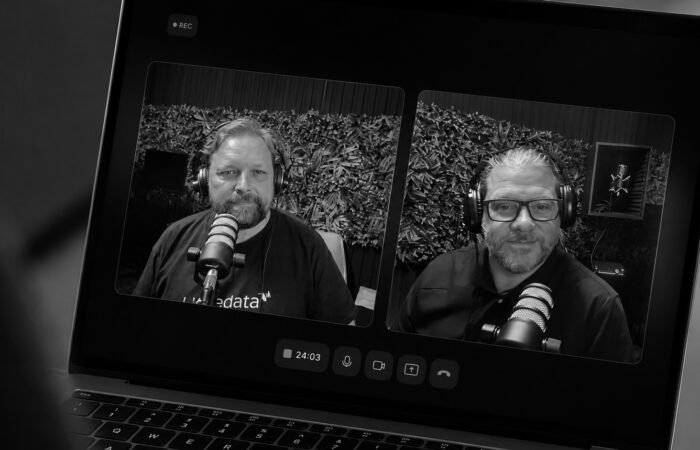
E18: Mads Singer

From Founder-Led Chaos to Scalable SEO Agency

Listen on Spotify

Podcast Overview

In this episode of Agency Intensive, Richard Hill sits down with Mads Singer, agency trainer and management consultant who’s helped hundreds of teams move from founder-led delivery to repeatable, scalable operations.

Mads breaks down why most brilliant SEOs stay stuck at the same revenue level year after year, what the “superhero syndrome” really costs your business, and the exact hiring sequence that prevents you from becoming the bottleneck. He explains the four business buckets every agency needs to master, why you should pick ONE marketing channel and go deep, and how to build repeatable SEO processes that scale.

The conversation covers the three critical growth stages where most agencies get stuck (0-10, 10-25, and 25-50+ people), why writing SOPs yourself is killing your time, and how to hire specialists instead of trying to clone yourself. Mads shares real examples, including the roofing SEO who 3x’d his business in 12 months by going to industry events, and breaks down what it really takes to build a sellable, scalable agency.

If you’re a talented SEO stuck in delivery or an agency owner trying to break through revenue plateaus, this episode gives you the exact steps to scale without burning out.

Listen to the full episode now, and don’t forget to hit subscribe.

Topics Covered

00:00 Introduction

02:07 Why talented SEOs struggle to scale

03:13 Mads’ background: From IBM to agency consulting

07:03 The four business buckets: Sales, marketing, operations, finance

08:04 The superhero syndrome killing your growth

13:38 Finding your ONE marketing channel

18:05 The roofing SEO case study: 3x growth in 12 months

20:36 Sponsor: Aristo Sourcing

21:38 Key hires for scaling from 5 to 20+ people

24:30 Building culture with your first hires

28:24 SOPs: What the gurus get wrong

34:34 Leadership challenges scaling £1M to £5M

35:05 Three growth stages where agencies get stuck

46:31 Starting an SEO agency from scratch today

47:19 The ONE process framework

50:02 Breaking down processes for specialization

51:40 Hiring specialists vs. cloning yourself

53:26 Book recommendation: First, Break All the Rules

54:14 Where to find Mads Singer
Richard Hill [00:00:00]:
You start off as the founder trying to do everything and you've got a way you want to do things. Maybe just pause and breathe.

Mads Singer [00:00:05]:
You have the superhero syndrome and the only thing that does is one thing and one thing only. It is slow down the growth of your business.

Richard Hill [00:00:14]:
Worked in a big corporate world, these.

Mads Singer [00:00:16]:
Big businesses, management is a skill set.

Richard Hill [00:00:19]:
I'm going to show them how it's done.

Mads Singer [00:00:20]:
Someone who does the process needs to own the process.

Richard Hill [00:00:24]:
I think we could go on forever here because it's such a, such a great topic.

Mads Singer [00:00:27]:
You can learn a lot in a very short period of time.

Richard Hill [00:00:38]:
Hi, I'm Richard Hill. Welcome back to Agency Intensive. Today I'm talking with Mad Singer, agency trainer and management consultant who's helped hundreds of teams move from founder led delivery to repeatable scalable operations. The business of SEO. We walk through the practical moves that actually free up your time. Hiring the right first managers and building simple processes that scale and the marketing channel that reliably finds the kind of clients you actually want to keep. We cover a lot in this one. Hiring and onboarding your first hires who will remove you from the day to day delivery.

Richard Hill [00:01:11]:
And we talk about common scaling mistakes and how to avoid them. Stick around in this one as there is a lot of real actionable steps you can use. Now, before we dive in, I just want to quickly thank our sponsor, Aristo Sourcing for sponsoring this episode. We've been using Aristo Sourcing for my team building needs from customer service, executive assistance, admin support to digital marketing specialists. And they're a great partner for agencies looking to scale without the recruitment hassle of the more traditional methods. We decided to partner with them after seeing firsthand how their team have helped me and my teams grow efficiently over the past 18 months with reliable skilled professionals who actually deliver. If you're ready to build your dream team, head to aristosourcing.com and find out more. We're put the link in the description so you can go straight ahead and check it out.

Richard Hill [00:01:56]:
That being said, let's dive straight into this episode. Hey Mads, how we doing?

Mads Singer [00:02:05]:
I am fantastic. How are you, Richard?

Richard Hill [00:02:07]:
I'm very well, thank you. Now this is an episode that I wanted to do for some time, I think. You know, I meet so many SEOs that are either usually brilliant SEOs, but maybe not doing as well as that I believe they should be doing. And there's usually some common threads there. And I met Mads all probably about four years ago now, isn't it? On a roof terrace in Saigon, of all places. And it became very apparent that Mads is the man that, that helps a lot, a lot, a lot of SEOs and business owners to structure their businesses in certain ways to become successful and obviously work with dozens and dozens and dozens of SEOs and very, very well known SEOs. So, yeah, had to get you on the show to talk about sort of the business of SEO rather than SEO for a change.

Mads Singer [00:02:58]:
Yeah.

Richard Hill [00:02:59]:
So I think before we get into the nitty gritty, it'd be good for you to introduce yourself, Mads, and introduce yourself to the listeners. You know, how you got into the world of sort of business management consultancy and helping business owners scale.

Mads Singer [00:03:13]:
Yeah, for sure. So I used to work in the corporate world, Xerox and IBM for many years. Actually loved working in the corporate world. It's very different from most people, but I really enjoyed it and loved it. I ended up leaving the corporate world in about 2013 to go and venture out on my own, but back to SEO. I actually started my first affiliate website in 2007, which is nearly 20 years ago.

Richard Hill [00:03:42]:
Nearly.

Mads Singer [00:03:43]:
So while working in the corporate world, I was doing some SEO on the side as a little side hustle, and that was a lot of fun. But fundamentally left the corporate world in 2013, 2014 type of thing, and initially started out doing management coaching and consulting. So helping business owners, both managers in larger companies, but also business owners and smaller businesses, really, how to be a good leader. Right. So how to. How to manage people the right way, how to get the right out of people, how to hire the right people, how to put the right people in the right seats, all of that good stuff. Delegation, one of the very big things that I work a lot on. And then about a year and a half later, I started up an outsourcing company called Aristo Sourcing, where we hire in South Africa primarily, and a good bit in Philippines as well.

Mads Singer [00:04:38]:
But for the last few years, South Africa have been sort of the. The primary area for us to hire.

Richard Hill [00:04:44]:
Yeah.

Mads Singer [00:04:44]:
Then I. I run a SEO conference, obviously the best in the world. Obviously. Of course, of course. Which take place every year in Saigon, in Vietnam.

Richard Hill [00:04:55]:
Yeah.

Mads Singer [00:04:55]:
And that is. So many people ask me why the location. And it's very simple. You force people to fly halfway around the world to come. It means only really great people come. So the quality of the audience at our event is absolutely next level. We have some of the best people from the us, North America, from Europe, from Australia, from everywhere in the world. That's something that it's hard to do.

Mads Singer [00:05:22]:
In the uk, if you go to something like Bryton SEO, there's a lot of people. Quantity. Yeah, a lot of people. But the goal for us with running our event is not getting the most people, it's getting the best people. And that we're able to do based on where we have the event.

Richard Hill [00:05:40]:
Yeah, yeah, yeah. I mean I think that's basically how we met. You know, I was sat here in the UK doing a bit of doom scrolling probably nearly four years ago or three, four SEO masteries ago. So three years ago and, and I saw an advert from your business partner Idao. Know that's you know, SEO conference in Saigon. I'm like, I always wanted to go to Saigon. So I literally had a bit of diary juggling and I booked it and then you know, obviously arrived and then met you and the, and the various people that now, you know, some very, very good friends and very good relationships. And you know, you mentioned Aristo sourcing one of your companies.

Richard Hill [00:06:22]:
Obviously we do a lot of business with you guys there as well. You know, we've been building a team in South Africa now for just over about 18 months with you guys and so yeah, just going to these events, I think there's a lot of stuff to unpack there. But just going to events as a, as an SEO, as a business owner, you know, some of the things, just chance conversations that can happen. Just whether it's you know, having a, having a, having a chat in the hall of the, of the conference or going for a meal with two or three what will be strangers and then finding out. Oh actually, you know, and just a little snippet from one of those conversations and yeah, here we are gearing up to go to the next SEO mastery in a few weeks time. So yeah, looking forward to it.

Mads Singer [00:07:01]:
Yeah, yeah.

Richard Hill [00:07:03]:
So obviously worked in the big, worked in the big corporate world, these big businesses, these big budgets, you know, and big head count and I guess similar prop, similar situations but bigger things to deal with, a lot more budgets and so forth. But you know, and then transitioned into working with you know, sort of medium sized enterprise and obviously sole traders that are, that are growing and big aspirational sort of businesses. But I think, you know, I'm keen to talk about, you know, we're sort of the business of SEO. You know, we've got a lot of very, very, very, very talented people come to these events. For example, you know, I'm usually sat next to somebody and that usually makes me look very, very stupid because they're very, very smart. SEOs. But then I always. It sort of.

Richard Hill [00:07:48]:
You have a similar sort of thread of conversation, you know, where they're sort of getting great results for their clients. They're doing quite well, you know, as SEOs, but they're not necessarily scaling their business. You know, what, what's sort of happening there and what sort of shifts do those people need to be focused on?

Mads Singer [00:08:04]:
Yeah, I mean, the biggest thing is that, and this is often the detriment of experts is when you're really good at something, you focus all your time and energy on it because you're familiar with it, it's comfortable, it's what you like, right? So I always use the analogy that many SEOs, you know, they, they know 99% of SEO and they're trying to learn like 0.1% more. They think that where they're lacking is, oh, if they just get a magic hack, then suddenly they'll be rich, right? But, but reality is, they know so much SEO, but their business skills or the leadership skills are down here, right? So the whole point is that like, like my management training course is literally two days. And for most people that changed their world because the difference between having very little knowledge to having a good bunch, it's such a difference, right? Like when, when you know, most things, like small, tiny increases, they're hard to come by, right? But when your skill level is relatively low, you can learn a lot in a very short period of time, right? So the whole, the whole focus for me when, when I talk with people and, and at events in general is, you know, spend more time on the business side of things, spend more time on the leadership side of things, spend more time. I mean, even hr, right? Most people come to me and said, I'm bad at hiring. Like, how many people have you hired? 2. Like, well, okay, right. No wonder.

Richard Hill [00:09:33]:
Yeah, yeah.

Mads Singer [00:09:34]:
Never done something, you know, and then I asked them the second question, which is, what have you done better? And they're like, well, nothing. And you're like that. That's a bit like taking the SEO analogy is you take a website, you put some words on it, and it's not ranking, and you're like, well, I'm bad at SEO. That's it.

Richard Hill [00:09:51]:
I'm no good at SEO.

Mads Singer [00:09:53]:
Yeah, well, correct. But, you know, that's where the learning begins. And, and the whole thing is business requires many skill sets. When you, when you look at any consistent business, like 99% of business in the world, they operate through a marketing channel, a sales channel, operations channel, and finance channel, right? Literally 99% of companies in the world are structured the same way. Sales, marketing, operation, finance. Those are four big areas. When you're doing SEO, you are typically focused on operations. Yeah.

Mads Singer [00:10:28]:
Now if you have a business that's only doing operations, you are not doing very much. Just like sometimes there's salespeople who start a company and all they do is sales and they don't know how to deliver, they don't know how to take care of money. But it's the same issue, right?

Richard Hill [00:10:44]:
Yeah.

Mads Singer [00:10:45]:
If you want to succeed in business, you need to either acquire the skills or bring people on board who have the skills that you're lacking. But I would say as a business owner, you definitely need to acquire some of those skills to a certain level. Right. So you need to have a good idea about sales, you need to have a good idea about marketing, you have to have some idea about finances. Like if you don't have any clue about finances and you're trying to run a half decent business, you know you're going to kill yourself from not knowing and not understanding anything about finance. Right. Because I had a good friend who literally broke the neck of his $2 million E Com store because he had no clue about cash flow and suddenly the bank account was empty and there was a very big container on the way to the US and he did not have money to survive for a month and the business literally went bankrupt. And it wasn't like he wasn't stupid, but he just didn't understand finance.

Mads Singer [00:11:51]:
Yeah.

Richard Hill [00:11:52]:
So we've got these four buckets in effect and usually, you know, the, the SEOs in this instance are very good at the delivery and the, maybe the operational as we'll call it, of delivering that thing. But then maybe, and quite often they then deliver it really well, but they're trying to polish, polish, Polish, polish this 2, 3% to get this. Unbelievable. But maybe a month passes by and they deliver that work. Oh, we've now got no work or the, the pipeline is very, very slim and we haven't done any marketing events and so forth. But we've done this really good bit of work over here. But if we've done a 95% job on the work, which is still brilliant, it's still a 10 out of 10 almost and had some time that half day, that day, you know, to, to spend on sales, marketing, cash flow money, making sure that we are just very aware and educating ourselves. So for the, maybe the listeners that are listening now that are, you know, they're on the, the, the smaller End of agency.

Richard Hill [00:12:49]:
There may be four or five people.

Mads Singer [00:12:51]:
You.

Richard Hill [00:12:51]:
They're doing really, really good work. You know, they're doing a couple of hundred grand a year, depending on what currency and where you live in the world, a couple of hundred pounds in real money. But, you know, what sort of thing should they be looking at specifically then to sort of go, right, well, we want to go from 2, 300 grand a year, you know, to. To break that magic number, that million a year, which I think is. Was a number that, you know, many years ago I was obsessed with, you know, the 83, 334 pound 40, I think it is. I might have got my math slightly off, but that 83. Obsession. 83k obsession.

Richard Hill [00:13:27]:
You know what sort of things? I mean, you've touched on them there. But if you were to give like a. A quick hit roadmap of, right, you need to do this, you need to do this. What would you say?

Mads Singer [00:13:38]:
Yeah. So I, I think most of the people who are sitting in that situation, the. The key things to figure out, and this is really relev. But the key thing to figure out is what is your marketing channel? There's a lot of people who says, be everywhere. And reality is, as a single business owner, if you try and do SEO and social media and YouTube and ads and blah, blah, blah, you got to do one thing and one thing only. It is break your neck. First of all, you're going to be doing a lot of things, and because you're doing a lot of things, you're not doing them very well.

Richard Hill [00:14:14]:
Yeah.

Mads Singer [00:14:15]:
So what I say for every business, go and find your marketing channel. And I don't say that plural. I say that in singular. You find one channel. That get you to the mood? Yeah. Right. For my businesses. So for Aristo sourcing, for example, that you're familiar with, where an outsourcing company, that channel.

Mads Singer [00:14:40]:
What's a bet?

Richard Hill [00:14:42]:
Yeah.

Mads Singer [00:14:42]:
Right. Now, here's the thing. There's not a right or wrong channel. Yeah, yeah, There's. I mean, there's might maybe channels that won't work or won't work for you, but the whole thing about marketing it, it is picking a channel and just keep going at it until you crack it. Right?

Richard Hill [00:15:00]:
Yeah.

Mads Singer [00:15:00]:
A lot of people, they run Facebook ads for five minutes and then say, oh, Facebook ads doesn't work. And you're like, well, they probably do. You might not be able to make them work, but it doesn't count on them.

Richard Hill [00:15:12]:
They'll work.

Mads Singer [00:15:12]:
Yeah, Right. So that's, that's the thing. Right. So with, with Aristo that have grown purely to a multimillion dollar business purely from networking. That was our initial channel. I go to a lot of events. So for me, when I left the corporate world it again, I understand the value of networking. Right.

Mads Singer [00:15:35]:
I spend a lot of time on events now and it was very simple for me to see that, particularly in the early days in the business, building the trust or one on one relationships is so much easier and simpler, at least it was for me, than doing it with 7 billion cold emails. Right. Again, it can work. Yeah, some people are really good at making it work. But for me, the simplest way, the simplest way I could go out and see what is it really people want, what is it really they struggle with. What are really the questions they asked me was, was networking and events, right?

Richard Hill [00:16:11]:
Yeah, I think that's it. You're, you're really comfortable with that, aren't you? You know, with it, with networking and events and speaking and I guess, you know, I think what you're saying, you know, pick the channel that, you know, pick a channel. But obviously different people have got different strengths. People like to be more visible than other people. Some people maybe not, not don't like going to events, you know, and, and you know, a lot more shy and nervous around that and you know, have. Whereas other people are fantastic writers and there's some, you know, great large SEO agency owners I know that, you know, sort of semi dominate LinkedIn with their stories and case studies and there, there's some funny bits in there and you know, but you might not see them out of their environment. But then, you know, you see other guys doing lots on YouTube and so it's trying to find something that get, you know, that you're comfortable with, where you can get the leverage as well. It doesn't have to be, you know, the most, but I think, you know, events is one, you know, I'm, I'm big for events as well.

Richard Hill [00:17:06]:
Because you're sort of speaking to many rather than that one or two people that you might do. If you're just trying to get people into one single call or.

Mads Singer [00:17:13]:
Yeah, and the big thing for me is if you're going through events in the world of SEO, we like just going to SEO events. I'm always saying do a few SEO events a year but then go where your customers are. I had a client in the US who was just working with Rufus and they'd been working, I think they'd been in business for about six years and their growth was really, really slow. For all the reasons we just talked about. And the guy only worked with Rufus and had never had the notion of going to a roofing event. I told him like he was just like myself, he was an introvert. Right. But basically what I told him is chat with your different best clients, find some of the best ones and say, what events are you going to? And literally tag along.

Mads Singer [00:18:05]:
Right now he 3x his business in the following 12 months. Yeah, because he went to roofing events. I think he went to two or three. And he was the only guy talking about SEO. None of these other guys had a clue. Now, many of them had been, let's call it scammed or they felt they had been scammed or cheated or tricked by people. The second he showed up in person, the second they met a person, they built connection, whatever. The relationship was a totally different level.

Mads Singer [00:18:36]:
He got so many new clients in a very short span of time and he could actually deliver results. So that was a good example of a way. But exactly as you say, the whole thing is find your way. Right. My good, good friend Julian Goldie, he's killing it on YouTube. I have friends that are killing it on LinkedIn. I have friends that are doing fantastic on ads. My good friend Gary Wilson built a link building company just predominantly on ads.

Mads Singer [00:19:03]:
Right. So you can build it up in any way you like. But my experience is that success from conf comes from finding one channel and doing really exceptionally well. Because realistically, you don't have the capacity to do more than that when you're a small business.

Richard Hill [00:19:27]:
Yeah.

Mads Singer [00:19:27]:
Like when you start having 40, 50 people and the likes, you have more resources. You can maybe get resources to help with some of these other channels, but when you have five or 10 people, you're generally not capable of doing that.

Richard Hill [00:19:41]:
Yeah, no, brilliant advice. Pick a channel, you know, and it can be the one that you're more comfortable with, obviously, you know, and then just go deep, deep, deep in a great example of going to an event in the industry that you're focused on, you know, and naturally that event, that room is full of people or it's got a lot of people that very likely could be your customer, but if they're not, they're still connected to those customers as well. So you've got opportunities to speak at these events, get to know the organizers of other events, you know. Brilliant. Yeah, yeah, go to events is that if you're comfortable with that, you know, it's, it's a great, a great one. So now I'm just going to pause this One for a second with a quick note from our sponsor, Aristo Sourcing. Now, when it comes to building high performing teams overseas for my agency, Aristo Sourcing is my go to partner. Whether you're looking to scale your operations, reduce costs or access world class talent without the hassle, they've made it incredibly straightforward for us.

Richard Hill [00:20:36]:
I've personally been working with them now for over 18 months and can thoroughly recommend their services firsthand. If you're ready to build your team and take your agency to the next level, head over to aristosourcing.com to find out more. Now let's get right back into this episode. We've talked there about that sort of, you know, four or five people, you know, that sort of size agency. But agency intensive is very much about building the sort of multi million pound agencies, you know. So usually not always, you know, that takes more head headcount, you know, we like to think, you know, that one of the magic numbers is 100k, you know, pounds per head count. So 20 people doing 2 million quid a year is a number we throw out there. So let's say you're an agency owner.

Richard Hill [00:21:19]:
That's not there yet. You know, you're still down the 4, 5, 6 people doing a few hundred grand a year, but you're trying. Your aspiration is to get to this couple of million quid a year. What are some of the cat, what are some of the key hires that you think they need to be focused on along the way? And what does that sort of org chart look like?

Mads Singer [00:21:38]:
Yeah, so I keep going back to what I said in the beginning. Sales, marketing, operation, finance. So when I start a new business, when I hire in the early days, I think of a business in those four buckets.

Richard Hill [00:21:51]:
Yeah.

Mads Singer [00:21:51]:
And the thing is most people, they start by hiring these random people in different spots. But I'm always thinking of those four buckets. When I'm hiring for someone for customer service, I'm thinking, okay, I'm hiring an operations person. Longer term, let's say this is my first customer service person, let's say that person number five in the company. But I'm constantly looking at, okay, what is the ability for this person to grow in the business? Right. Is this a role where I need the person who can really grow into success? Do I need this person to become a manager? Do I need this person to whatever, ideally over time, like my first five, six hires in any business, I don't hire people that I don't see future potential in. Because if you're growing a business, you need to have people around you that can grow with the business. And the first five or six people really helps set your culture right.

Mads Singer [00:22:57]:
And culture, I know it's very, for small companies, that's very difficult to understand, but it's critically, critically important for success. Right. So the culture in general of, of a business is shaped by those initial people. Culture is not what you put on a piece of paper and say, hey, we are friendly and we are kind. We are all this culture is when you're five or six, first hires come in in the morning and sit down wherever they're in an office or working remotely, what do they do? That is culture. Do they show up on time? That is culture. Do they work hard? That is culture. Do they deliver on their goals? That is culture.

Mads Singer [00:23:37]:
So those things are all culture net driven by the early hires. Right. And this is one of the key things and is not just delegation, but one of the key things. In the early days of a business, you want to spend plenty of time with the people you have. If you have a team of four, five or six people right now and you don't have the time to spend with them, you're doing the wrong things. I don't care if they're located in India or China or in the UK or wherever they are. If there are 40 hours a week or 30 hours plus a week resource for your business, you want to invest time with them every single week. That is the most important thing.

Mads Singer [00:24:30]:
Because if your team around you is not growing and you're staying busy, you're doing it all, you have the superhero syndrome. And the only thing that does is one thing and one thing only. It is slow down the growth of your business.

Richard Hill [00:24:48]:
Yeah, I think that's where most people struggle. That's where they need the support they need, you know, they need the training. I think it's like we going back to what we said already, they're good at the doing, you know, the doing the thing and, you know, whatever it is, the SEO, the this, the ranking, the so on and so on. But then we mix some people into the mix and that's very unique and those people are very unique. And you've, you've got a way you want to do things, but maybe they, the new people don't automatically do that that way. Not that they have to do it that way, that you, you want them to do it that way, but they're obviously there to contribute and to help and to help you do it better. So it takes some adjustment as a Founder doesn't it to. To really just maybe just pause and breathe and let people be a little bit.

Richard Hill [00:25:36]:
But not, you know, the same respect you've got to. You want things done in a certain way, but you want to give them enough room to be able to also contribute. And you'll go, actually, that guy's a way better SEO than me now. I've actually just stepped back for a second and actually we're delivering twice as much work and I'm doing less time on that. I'm having time. So it's giving yourself that almost just shut the up for, you know, maybe let. Let other people do. But that's a challenging piece, I think.

Richard Hill [00:26:03]:
You know, I see it a lot of the people I meet, you know, well, have we come out to, you know, SEO mastery. They're like that, that people bit, you know, what would you say to, you know, I think SEOs typically are. How can we put it a bit more. A lot more introvert, you know, that like to sit with their maybe headphones on doing the do. But when it comes to the people thing, how do they adapt to that? Maybe. Is there any advice you would give them on that?

Mads Singer [00:26:32]:
Yeah, it's. Honestly, it's a skill. So SEO is a skill. Management is a skill. Matt Diggity, like most people, when I started working with Matt, his first sentence to me was, I don't really want to deal with people. Can I just hire someone to do it? Here's the thing. Twelve months later, he's like, I don't want to do SEO. I just want to manage people.

Richard Hill [00:26:59]:
Yeah, yeah, yeah, yeah.

Mads Singer [00:27:01]:
Now here's the difference. When you learn how to get shit done through other people so you don't have to do it, no matter how much you love what you're doing, that feels great. And I can promise you, I can promise you sitting writing meta descriptions for the 7,400th time. It's not fun.

Richard Hill [00:27:27]:
Yeah.

Mads Singer [00:27:28]:
Find it fun. You're insane.

Richard Hill [00:27:30]:
Yeah, yeah, yeah. We, we joke about funny you say that. You know the, the Karate Kid film where it's like wax on, wax off. Wax on, wax off. Meta descriptions is our equivalent. Was the equivalent of that when somebody new comes in the business, we wax on, wax off for like the first three months. And then we're like, okay, you managed to get through that. That was what we used to do.

Richard Hill [00:27:50]:
Not anymore, but yeah, yeah. So you got to crack on. You got to do it. So obviously the people bit, but I think let's change direction a little bit and talk about Process frameworks. I think you know the magic word sops. You know, there's standard operating system systems, processors. Sorry, standard operating processors. I think, you know, the SEO particularly is changing quite a lot.

Richard Hill [00:28:24]:
You know, you could say that about a lot of things. But, you know, what's your advice on sort of getting consistent work done in a consistent way and how to use SOPs in an agency?

Mads Singer [00:28:36]:
So I'll tell you what all the gurus are telling you, and then I'll tell you why it's wrong. So what all the gurus are telling you is to sit down, figure out a process, write it down on a piece of paper, say, hey, Richard, here's a process. Go do this thing. And then when you've done that with one, you do it with the next, and you do it with the next, and you do it with the next. And then that's how you spend your life as a business owner.

Richard Hill [00:29:02]:
But.

Mads Singer [00:29:04]:
And I can tell you that is not the way you want to spend your life as a business owner. Yeah, yeah, 100%. When you hire your first staff member, second, third. Is it a good idea to do some SOPs? It can be. My, my philosophy is very, very different. My philosophy is I bring people in, I might show them how to do something, I want to give them ownership of what it is they're doing, and then I want to delegate the responsibility to them for creating and keeping the sops up to date. So my philosophy is very simple. Someone who does the process needs to own the process.

Mads Singer [00:29:52]:
If the person doing the work is not owning the work. Like I was managing IBM, right. At one point. Managing. Let's just say when I managed 100 people, like, I don't know how many thousands product processes I was responsible for. I can promise you there was no way a planet Earth that I could make sure they were all up to date. Right. It just doesn't happen.

Richard Hill [00:30:17]:
Right.

Mads Singer [00:30:17]:
And that's like if you're building a business with two processes. Okay, great. But if you're building a business, you're not. Yeah. So there is processes, there is workflows, there's stuff. So again, if there's a skill, if there's a knowledge I have, I love sitting down. I love showing someone how to do things. I love.

Mads Singer [00:30:36]:
I mean, loom is amazing. Yeah. And then I don't give someone a loom and say, create a process of this. I give someone a loom. I say do this process 20 or 30 times, become very comfortable with it, and then document how you're doing it.

Richard Hill [00:30:52]:
Yeah, yeah.

Mads Singer [00:30:53]:
But as a business owner, my time in the company is the most valuable. Me spending time sitting down, documenting stuff and so on, that is not where my time is best spent.

Richard Hill [00:31:06]:
Yeah, it's pain, a lot of pain. So. So somebody else, the person that's doing the thing, documenting after they've got very, very proficient in it, and then they then respond.

Mads Singer [00:31:20]:
One of the big challenges that many business owners have, they say, my staff never come and suggest how we can improve the process.

Richard Hill [00:31:27]:
Yeah.

Mads Singer [00:31:28]:
Because they have no ownership.

Richard Hill [00:31:30]:
Yeah.

Mads Singer [00:31:31]:
You haven't maybe told them, let's say your staff member Richard built the process. Right. If Richard thinks, oh, this could be done better, what do you think Richard does?

Richard Hill [00:31:44]:
Yeah, change.

Mads Singer [00:31:46]:
Exactly.

Richard Hill [00:31:49]:
So you've got to have that dialogue with your team. So it goes back to the comms, you know, that probably number one skill of communicating with them, give them ownership, you know, and if they find, as we know, you know, you know, things in the last. I mean, it's always moving, isn't it? But the last year with AI and so forth, the way we do things and the different tools and AIs we may use now and layer in to speed up and to improve. If we haven't changed our SOPs in 12 months, there's a major problem. But obviously making sure that the people that are on the front line, I've got that flexibility or ownership to, To. To do that and have responsibility for that. Yeah, I do remember, I do recall sort of passing the SOPs to some of my team and then they got. They spent, you know, this is going back, you know.

Richard Hill [00:32:35]:
Yeah. It's a lot of pain. A lot, A lot of pain. You know, a lot of pain, a lot of time, a lot of hours. You feel really chilled. We've done the SOPs. They're brilliant. And then about three months later, it'll be like, right, who's did somebody new starts and, you know, or somebody that's been here a long while.

Richard Hill [00:32:52]:
Oh, why have we done it that way? Oh, I don't know. And then they haven't even been given the SOPs or they were even aware there was an SOP. Or we don't even use the system that the best OP is based on, you know, we don't use Sam rush, we use 8 refs or whatever it may be, you know. Oh, you know, and people aren't even aware there are so, you know, things like that have happened to. To be completely transparent over the years. And so having that ownership piece.

Mads Singer [00:33:17]:
Yeah, I've, I've helped, I've helped A good few, you know, getting a business ready for sale and stuff like that. And like the amount of times where I'm like, show me your sops and they start showing me documents that was updated five and a half years ago. Right, Yeah, I don't do it. I don't even need to ask if they're up to date. I, I, yeah, yeah, it is a, yeah.

Richard Hill [00:33:42]:
I think you could go to most agencies. I mean, it is probably one of the most changing, I mean every, every industry now. But you know, SEO very much so. You know, the different tools that are coming out, the different ways to do things, it's a, it's a, it's a tricky one, but still, you know, giving ownership to people. So we've, we've talked about four or five people, we talked about 20 people, you know, and a few, a few ideas there. But, you know, building from getting to that million, hitting that 83, 333, reoccurring, you hit the mill and you think, you know what, that's pretty good. And you might have spent however many months, years usually to get there. And then things can start to get very exciting because, you know, potentially your SEO retainer, retainers are no longer $500, they're five grand a month, ten grand a month, half a dozen clients soon leads to 2 million quid a year, 3 million quid a year, and so on.

Richard Hill [00:34:34]:
So, you know, how does the sort of leadership skills, leadership challenges change, you know, around scaling from 1 to 5 million? You know, I think as we've said, you start off as the founder trying to do everything and you do everything. Then you maybe hire, hire, hire, get used to hiring and get comfortable with having the right people in the right seats. But then, you know, a 4 or 5 million pound business turnover a year, you know, very, very different to, you know, a million pound business. What would you say about that?

Mads Singer [00:35:05]:
Yeah, so that there's typically a couple of steps. Right. So, so throughout the growth of, of an agency, there's, there's typically three different steps. So there's, I tend to say 0 to 8 or 0 to 10 people. You can kind of like, you don't want to do it, but you can kind of get away with growing to that level and kind of managing everybody. A bit like spider in the middle. Right. So you can, I've seen people maybe get to 12 people or something like that, managing them all, and obviously that's not the way to do it, but you can.

Richard Hill [00:35:40]:
Yeah.

Mads Singer [00:35:40]:
Now in, in that stage, you, you have, you have a very Skinny team you have. Communication is quite straightforward because you're communicating directly to everyone, right? Then you have the next step. So from that step, so from 10 up to about 25, 30 people, there's another step. And in that step, that's when you first start putting managers in place. Most of the business owners still know everybody, but they start putting managers in place, they start learning how to delegate and so on. And that step is that requires a lot of management growth and development. Then you have between 30, 25, 30, to somewhere between 50 to 60. And in that step, what happens is you get to a level where one, you often have multiple layers.

Mads Singer [00:36:37]:
And that means that communication becomes a totally different game. So you need to learn to communicate through other people. You often don't know the people at the bottom of the organization.

Richard Hill [00:36:49]:
And.

Mads Singer [00:36:52]:
There'S not a gap, but there's a big gap difference in how you manage. And company communications become so, so different when you get to that level. Now above that level, obviously there are still hurdles, there's still growth spurts and so on, but above that level is, it is just about management growth really. It's, it's about team and management growth. Right. But those are kind of three steps that people often struggle to, to get through. So you often see a lot of people that are either stuck at sort of 10 people, they're stuck at 25 to 30, or they're stuck at the 50 to 60. And that's most agencies, most companies honestly goes to those hurdles and they can be stuck if they don't get help.

Mads Singer [00:37:41]:
They can be stuck in those areas. Yeah, quite a while.

Richard Hill [00:37:44]:
I can put my hand up, you know, that's exactly where we were, you know, I think 10, 12, you know, we get to 13, 14, then we bounce back down to 10. You know, we couldn't quite crack that. And I think, well, as you identify, identified, there was that layer again, the right people in those management seats that could then take control really, or take and push those areas. Whether it was a, in that instance it was, for us, it was an operations manager that could take all, all the delivery. So then at the time I could then focus more on the sales and marketing. So then the sales and marketing had an uplift because I wasn't involved with any clients. And then it's then, right, okay, where are the other departments? Right, we need a head of, you know, getting a good head of department for the particular services and then getting a really, really, really strong finance piece. So we got, in our instance, we, about five years ago, we went With a.

Richard Hill [00:38:38]:
Well, I was. Again, it was an event. I went to and went to an event. A mastermind, actually, that I was involved with about eight people. And one of the guys owned a accountancy firm just for creative and digital businesses. And when I met him, I was like, oh, my God, this guy's insane. And he became our accountant and his team now do. In that sort of unlocked that finance piece that maybe we needed more advice that we didn't know, you know, and.

Richard Hill [00:39:04]:
And then you sort of. And then it started to move, you know, and I've seen it with a lot of friends that own agencies, getting these right people in the right seats, these managers that can manage. So when you say, or when you discuss with that manager, they can then communicate that back down the line in a, you know, you know, obviously communicate it, but also see it through and make sure that things are getting done. Obviously. It's not always smooth, you know, a few hiccups there, but yeah, managing 10, 10 people and then pushing through to that 25 plus, it just starts to get very exciting, doesn't it? Because I think that's where the, the big moves, you know, and then you're able to hire, you know, when you've got, you know, when you're doing, you know, reasonable money, you know, you've then got the couple, you've got the cash in theory, you know, to. Then, you know, when you go to these events and you meet these insane SEOs, you can hire them. You don't have, you know, you could, you could employ them, you know, which is quite an interesting thing, really. You see these guys on stage that maybe, you know, they are brilliant SEOs, but maybe they're looking also for, you know, maybe a change as well.

Richard Hill [00:40:05]:
So you can hire, which is what we've done, you know, we've hired a lot of speakers to work for us and with us and, you know, in different guises, you know, and then that accelerates the delivery, you know, some. Some of your speakers, you know, are doing some work for us at the moment, you know, from your events, you know, things that my team wouldn't be able to do. And, you know, so you fill in the puzzle in and mixing it up with different people you meet. But yeah, yeah, I think it's hit that million. I think things do start to change. That's my. What I've seen, you know, different game.

Mads Singer [00:40:34]:
It's a different game. I'd say it's not from my experience, it's not always about the million because sometimes you can, you can Have. I mean, an SEO may be a good number, but, you know, I see many different kind of business and sometimes it's not about the million, sometimes it's about, you know, the quantity of people really plays a lot into the game. But yeah, the ability to hire better people. Right. Like, the more you pay, the better people you can acquire. And as I say, like, when I go to SEO events, the smartest people rarely make a lot of money. You can find some really, really brilliant SEOs working for five grand a month.

Mads Singer [00:41:10]:
Month.

Richard Hill [00:41:10]:
Yeah.

Mads Singer [00:41:12]:
And it's not like they're happy, they love what they're doing. But again, if you're, if you're running a business, you probably don't want to work for five grand a month.

Richard Hill [00:41:22]:
Yeah.

Mads Singer [00:41:22]:
So, yeah, it's literally, I feel, I.

Richard Hill [00:41:26]:
Feel like the dumbest person in the room every other night when I'm at these events. Not, maybe not quite, but, you know, in terms of, if you start talking, you know, deep, deep, deep, you know, special specialism on, you know, one of the, you know, whether it's link building or whatever, it may be anything. Yep. We'll, We'. Well, yeah, well, maybe hire you, you know. Yeah, yeah. Okay. So I think, you know, we've touched on quite a few things there.

Richard Hill [00:41:49]:
We've started, you know, the, the sort of fortify. You've gone from founder to 4 to 5, you've gone to 10. Then we've scaled past and looked at some of the different plateaus and to push through. And we know we probably made it sound all very easy, you know, but we know the reality, you know, it's quite different if, if somebody's listening now, an agency, only an SEO agency, you know, what would you say to them about sort of implementing change in the next sort of 30 days? What exactly should they be looking at doing to grow their agency?

Mads Singer [00:42:18]:
So what I would say, so particularly this is not so much four to five, but that's a little bit bigger a lot of the time because again, as business owners, a lot of us don't walk into business with management experience. So very often where I see the biggest jumps is when you're promoted people into leadership role and management roles that aren't necessarily experienced managers or haven't got training or education is invest in them. Yeah. The amount of companies, and this is not just about me or my specific training, but the amount of companies I walked into and literally spent two days with them and you just see gigantic change after it. But a lot of the time, right. Sometimes people don't have a Ton of resources. Sometimes as simple as starting to get some books for your leaders and managers. But you have to think of if someone gets promoted into a management role, let's say I'm a great sales guy.

Mads Singer [00:43:14]:
And suddenly my boss is like, hey, man, I want you to be the sales manager. I'm like, okay, great, that sounds exciting. And I show up, I'm like, okay, now I'm the manager.

Richard Hill [00:43:23]:
I've got people.

Mads Singer [00:43:25]:
Right? Like, what are you? What's the next step? It's a totally different skill set, right? So one of the big things you always say, the best sales guy is not necessarily the best sales manager. And while that is true, that is often because it is not the same skill. Someone who can learn to be an exceptionally good sales guy can learn how to become an exceptionally good manager, but it's not the same, Right? And it's the same with engineers. If someone can learn to be a great engineer, they can learn to be a great manager, right? Management is a skill set. If you can learn to be a great SEO, you can learn to be a great manager, but it's a different skill set. So look at the people you have in leadership and management roles and look at how can you help them become better leaders and managers? Because that is your number one hack. It's not about your processes. It's not even like everything else.

Mads Singer [00:44:20]:
If you have leaders in your business already and they become better leaders, your life get significantly easier.

Richard Hill [00:44:30]:
Yeah, you are. I mean, just to add to that, you know, I've just had a month. Well, in November, I was in the office three days. And that's because of that sort of system, the getting people in the right seats, having, you know, different team members. You know, I know we've spoken about this before, but when I go to these events, for example, and I, we come up and I come up with, and maybe, you know, I see this thing that's brilliant. But we connect that to that. It's even, wow, we can take this little idea over here and add it to what we do over here and oh, that's amazing. But then my thought and my immediate thought process is, who is going to do that? Not how do I do that? You know, who are the people that either we've got them, or I've just met them at a dinner or they've spoken on stage, right? I need to go and have a chat with a guy who just spoke about that thing.

Richard Hill [00:45:20]:
How are we going to then hire him? And it doesn't have to be full time. It could be you know, probably doing project work with quite a few of the people that we both know, you know, but also hired, you know, quite a few people as well, full time. So finding those people who, the, who, who are the people that are going to do the thing, you know, and like you say, it can start just with a book, you know, there's a book where you learn, you know, but then there's nothing like a bit of face to face training as well. Big believer in, you know, spending, you know, whether it's putting your team, usually yourself, to start with, but then those managers investing in those managers training with courses, with 1, 2 days of training, ad hoc, you know, are you going to commit to, to somebody to come into the business for six months and do a day, a month and get that consistency and train? Because I think the challenge is also, you can go and read a book, for example, or buy an expensive course, but it's the practical element I think is quite usually missing. So then you want to reinforce that learning with some practical. Right, well, half a day, a month or so many hours a month, we're going to get a team together and do this, reinforce this, whether it's a sales process, whether it's an SEO piece and so on and so on. Yeah, brilliant. Yeah.

Richard Hill [00:46:31]:
Okay, so final couple of questions. Mads, I think, I think we could go on forever here because it's such a, such a great topic, just scaling businesses full stop. But SEO agencies, you know, if you were starting an SEO agency from scratch, you know, you were like, right, I'm going to show them how it's done. You know, I've trained all these agencies, you know, I've built these businesses. I've built a lot. Obviously you've built a lot of your own businesses to multi million pound businesses. But if tomorrow you are starting the Mad Singer SEO agency, you'll probably come up with a more creative name than that. But possibly, possibly your target is to go right from a standing start.

Richard Hill [00:47:06]:
I want to hit 5 million pound a year in three or four years. You know, knowing everything you know about agencies, the people that you've helped scale, you know, what would you do?

Mads Singer [00:47:19]:
Number one, what I do with every business is figure out what is my one process. And what I mean with that is that most agencies bump into this issue where they try and do everything for everyone. And that's painful. And that is often what takes most people a couple of years to figure out, what should we actually be doing? So by starting out by identifying a process and saying what is the one Thing we do. So a lot of people here, niching down, they think of it as like, okay, plumbers. But niching down is not about a vertical per se. It is about a scalable, repeatable process that you can execute again and again and again and again. Right?

Richard Hill [00:48:03]:
Yeah.

Mads Singer [00:48:04]:
What is that? Yeah. Right. Now let's take an example. So let's say I want to go out there and I want to do. Let's take something wild. Let's say E commerce SEO. That sounds pretty insane, right?

Richard Hill [00:48:17]:
You can't do that. You're bad.

Mads Singer [00:48:21]:
So let's say I go and start an agency and I say, okay, I want to start an ecom agency because I know a lot of ecom people or whatever. What's the process? So I could nail it down in a few different ways. But the key thing is what is the framework? So that's often a system. So what, you know, do I do shopify or do I pick something that very few people pick? Do I go out and become the magento ecom guy, the only one on the planet because the framework sucks? No, I didn't say that. But do I become the magento ecom guy? Right. I will bet you you can go and create a $5 million a year business as a magento ecom business. So figure out that process. Figure out exactly what is it we do and exactly what is it we deliver.

Mads Singer [00:49:15]:
What is it customers can expect when they work with us? And this is not social media. This is not all this. This is breaking down, looking at the process of SEO and saying what exactly is it we are going to do and how can we do it repeatedly over and over and over again. So for example, it's finding, okay, well, it's an E commerce business. So they have category pages. How do we structure a product process for doing category pages? How do we set up a process for doing product pages? How do we do all of this stuff? But it's basically building out that one process that is repeatable and scalable. And then what you do is in the beginning, it's often yourself or one or two people who are doing this entire process. And then you simply start breaking it down.

Mads Singer [00:50:02]:
It says, okay, first step is customer onboarding. Bob's going to do that because Bob's great with people. Second step is start with an audit. Pete is going to do that because Pete is good at that. And over time, you can break down the process more and more and more and you can add in more people. So organizations exist for the specialization of labor, which fundamentally means that you want to take your process, you want to break it down as much as you possibly can, because for two core reasons. One, it makes it way easier to scale and grow, and two, it makes it way easier to replace people. One of the big issues you'll see in many successful agencies is that if one person leaves and it's the wrong person, they're effed.

Mads Singer [00:50:56]:
Yeah, yeah. Right. When you're building out your process and you're breaking it down and you're giving individual people responsibilities for different pieces, makes it significantly faster to train new people. It makes it significantly cheaper to hire people because they need less of a skill set. And fundamentally, your ability to scale, like, if you take the framework, you can sometimes go and scale. You can go and double your business in a month or two because it is scalable and it's repeatable. Yeah, that is the right way.

Richard Hill [00:51:30]:
Yeah. And if one piece, if one person leaves, it's just one piece out of so many, and that's trainable, scalable. So you're not relying on one person to do too much.

Mads Singer [00:51:40]:
Yeah. So people try. And when I work with most agencies initially, they're always like, I want to hire a replica of myself so I can do twice as much. I'm like, no, you don't want to do this, you want to do that. Right. Hire people who are specialists at individual segments of what you're doing. And here's the thing. Anytime as a business owner, you says, I'm the only one that can do it, or no one else have the skills to onboard a new client or come up with this strategy.

Mads Singer [00:52:09]:
You have not defined your process.

Richard Hill [00:52:11]:
Yep, Yep.

Mads Singer [00:52:13]:
And if that is the case, I'm not saying you can't make decent money. Right. But you're fundamentally building a business that if you pass away and die, the business is worth nothing because there's nothing left.

Richard Hill [00:52:24]:
Yeah, right, Yep.

Mads Singer [00:52:26]:
So if you want to build a business that's sellable, that's scalable, that's growable. It is. Build that process, identify that process and fill in the gaps in the flow. And the more you grow, the smaller the individual pieces become. Yeah, right.

Richard Hill [00:52:41]:
Yeah.

Mads Singer [00:52:42]:
Like, at some point, link building might be one guy, whereas at some point in the future from that, link building might be broken down. So you have a guest post guy and you have a PR guy and you have a different.

Richard Hill [00:52:53]:
Yeah.

Mads Singer [00:52:53]:
So it just breaks down. The process just breaks down to smaller and smaller pieces the more you go.

Richard Hill [00:52:59]:
Yeah, brilliant. And then the marketing is absolutely focused on maybe a channel, like you said at the Beginning, but it's very. It's a very clear message, isn't it? You are. You are the Magento SEO guys. We know that stuff inside out. Sounds just like my business.

Mads Singer [00:53:17]:
Yeah.

Richard Hill [00:53:17]:
Fabulous. So, Mads, it's been a pleasure. I like to finish every episode with a book recommendation. Do you have a book to recommend to our listeners?

Mads Singer [00:53:26]:
Oh, I do. Okay. You'll love this title. First Break all the Rules.

Richard Hill [00:53:32]:
Oh, that's a new one.

Mads Singer [00:53:34]:
Yeah, the Guy. It's written by a guy called Marcus Buckingham. Surprisingly, it's about management. But I love the book. I love the title and it's.

Richard Hill [00:53:50]:
Yeah, yeah, brilliant. Well, we'll link that up in the show notes. I've not heard of that one. I think that's the first for quite a while that hasn't. That I've not heard of, so yet. We'll get that in the show notes and we'll get that. We'll get that ordered to for ourselves as well. Well, thank you for coming on the show.

Richard Hill [00:54:04]:
For those that want to find out more about what you do, more about the training and the events, what's the best way to reach out or find out about your services and your events?

Mads Singer [00:54:14]:
Well, luckily, I'm the only guy in the world called Matt Singers, so that means that it's relatively easy to find me on. On social media and so on. Right. And I got probably three. Three good websites. So matt singers.com is for management. Aristosourcing.com is if you're looking to hire amazing people. And then we have the seomasterysummit.com which is if you're looking to go to the world's best SEO conference.

Richard Hill [00:54:46]:
Yeah, And I can attest to all three, to be fair. Yeah. It's not very often that happens. So, yeah, we'll see some of our listeners, hopefully in a few weeks time in Saigon, in Vietnam, at the SEO Mastery Summit. Thanks for coming on the show, Mads. I'll see you soon. Very soon.

Mads Singer [00:55:05]:
My pleasure.

Richard Hill [00:55:07]:
Cheers. Bye. If you enjoy this episode, hit the subscribe or Follow button. Wherever you are listening to this podcast, you're always the first to know when a new episode is released. Have a fantastic day and I'll see you on the next one.

Work with Richard Hill Work with Richard Hill